
Scapania compacta
Scapania compacta
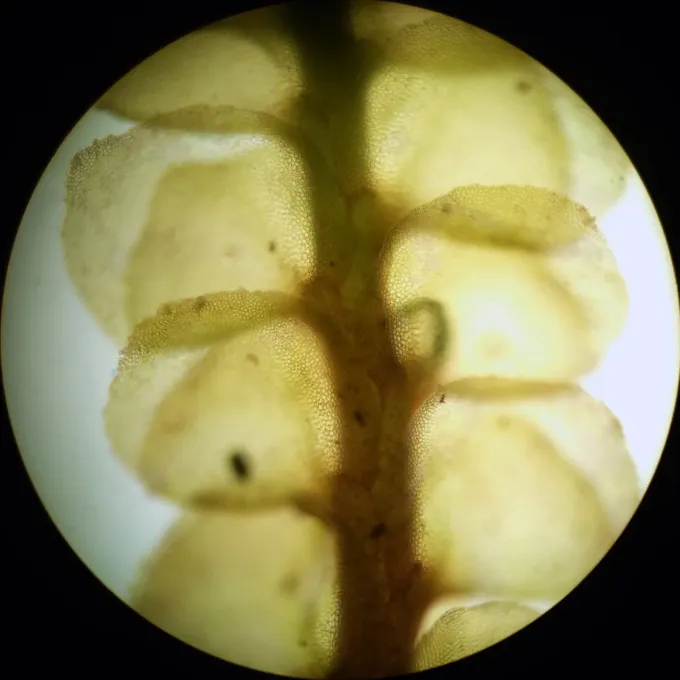
Description
Growing requirements
Scapania compacta is a liverwort species belonging to the family Scapaniaceae. As a non-vascular plant, it lacks complex root systems, relying instead on rhizoids to anchor itself to substrates such as moist rocks, cliffs, or humid forest soils.
The distribution of this species is primarily centered in Europe, particularly in regions with an oceanic climate. It thrives in shaded, cool microclimates where atmospheric moisture remains consistently high throughout the growing season.
Botanically, the plant is characterized by a leafy thallus with two distinct rows of leaves, often showing a reddish-brown pigmentation when exposed to specific levels of sunlight. This adaptation helps the organism balance photosynthetic efficiency and water retention.
Regarding environmental requirements, Scapania compacta is highly dependent on clean, humid air and acidic substrates. It is extremely sensitive to desiccation and chemical pollutants, which prevents it from being used in any agricultural or commercial cultivation systems.
In terms of ecological significance, this species serves as a biological indicator. Its presence in a specific area signals high environmental quality and stable hydrological conditions, which is crucial for biodiversity monitoring rather than agricultural production.