
Santiria trimera
Santiria trimera
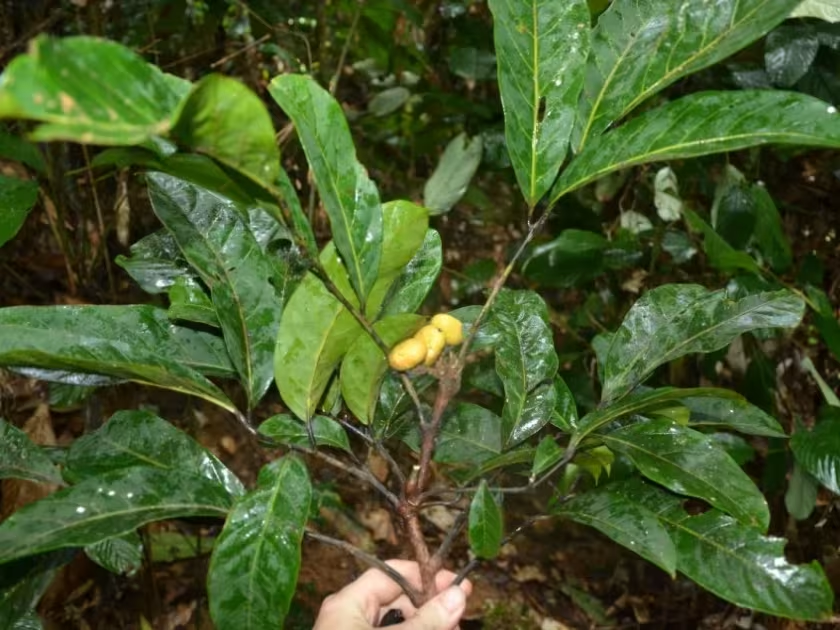
Description
Growing requirements
Santiria trimera is a tropical tree species belonging to the Burseraceae family. It is natively distributed across the tropical regions of Central and West Africa, where it thrives in dense, humid forest environments.
The tree requires a consistently warm and humid tropical climate for optimal development. It is particularly well-adapted to areas with high annual rainfall and limited seasonal variation in temperature, making it a stable component of the rainforest canopy.
Regarding soil requirements, the species performs best on well-drained, nutrient-rich soils that allow for deep root penetration. It is not suitable for waterlogged environments and requires sufficient aeration to prevent root hypoxia during heavy rainy seasons.
From a botanical standpoint, the tree displays unique characteristics such as the secretion of aromatic resins and a dense wood structure. The complex vascular system allows for the transport of nutrients in a competitive forest environment, favoring vigorous juvenile growth.
The economic importance of Santiria trimera is rooted in its timber, which is utilized for construction and furniture manufacturing due to its durability. Furthermore, parts of the plant, including the bark and resins, are frequently incorporated into traditional phytotherapy practices.
Main diseases and pests
The primary threats to the health of these trees involve xylophagous insects, which bore into the timber and significantly compromise the structural integrity of the trunk. Infestations are difficult to manage in wild or semi-wild stands.
Fungal pathogens represent another significant risk, often targeting the bark and creating lesions that allow secondary infections to enter. Maintaining good forest health and removing deadwood are essential practices to mitigate the risk of disease spread within the stands.