
Santiria tomentosa
Santiria tomentosa
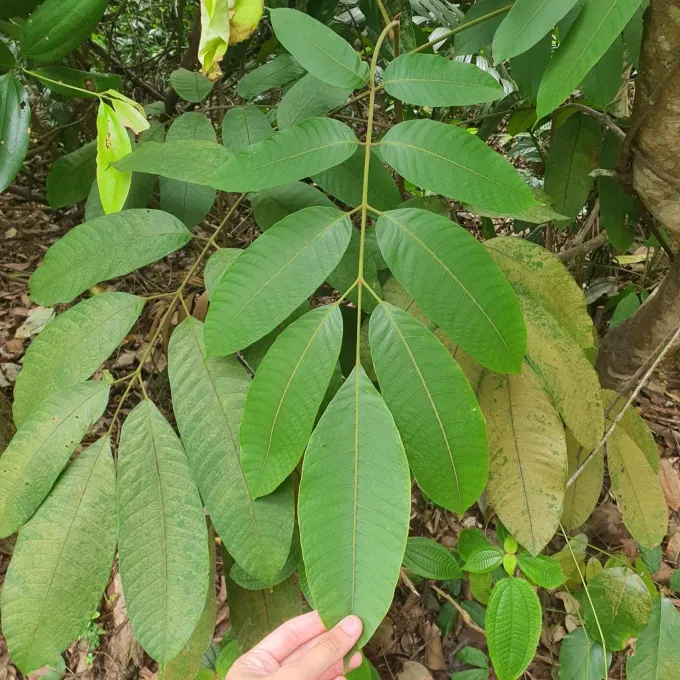
Description
Growing requirements
Santiria tomentosa is a notable member of the Burseraceae family, predominantly found in the primary and secondary rainforests of Southeast Asia. It typically grows as a medium to large-sized canopy tree in diverse tropical ecosystems.
The native distribution ranges from Peninsular Malaysia to Borneo and parts of the Indonesian archipelago. It is highly adapted to tropical rainforest conditions where precipitation is abundant throughout the year.
The species thrives in deep, well-drained soils, often favoring sandy loam environments. It is not tolerant of prolonged waterlogging, which can compromise the root system of young specimens in a plantation setting.
Optimal growth requires consistent high temperatures and high atmospheric humidity. In terms of silvicultural practices, it is often treated as a part of natural forest management rather than an intensive plantation crop.
The timber obtained from this tree is utilized for general construction purposes and light carpentry. Its physical properties make it a reliable choice for local infrastructure and traditional woodworking applications.
Harvesting
Harvesting strategies are usually determined by local forestry regulations to ensure the survival of the mother trees. Proper management ensures that the natural regeneration of the species continues effectively.