
Santiria oblongifolia
Santiria oblongifolia
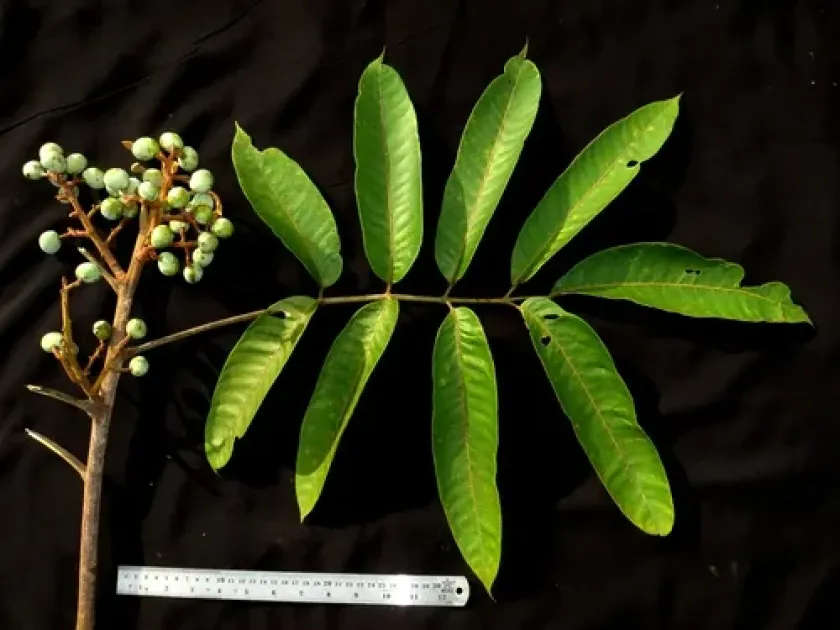
Description
Growing requirements
Santiria oblongifolia belongs to the Burseraceae family. It is an evergreen tropical tree that naturally thrives in the humid rainforests of Southeast Asia.
For optimal growth, this crop requires consistently high temperatures throughout the year with minimal seasonal variation. The ideal environment consists of a tropical climate characterized by high annual rainfall and humidity levels.
Soil requirements include deep, well-drained clay or loamy soils rich in organic matter. The plant is highly sensitive to waterlogging, making the selection of a site with natural drainage a critical factor for success.
In its native range, the species is commonly found in lowland areas and gentle slopes, where the root system can access nutrient-rich topsoil layers. The tree exhibits a slow initial growth rate during its early development stages.
Botanically, the species is defined by leathery, elliptic to oblong leaves that allow for efficient photosynthesis under the filtered light conditions of the forest understory.
Yield
The primary economic value of the species lies in its high-quality timber, which is utilized in local construction and for the production of specialized joinery.
Resins produced by members of the Burseraceae family are commercially significant, finding applications in the chemical and fragrance industries due to their unique aromatic profiles.
The fruits of the tree, which are small drupes, serve as an essential food source for local wildlife, thereby supporting the biodiversity of tropical forest ecosystems.
Commercial timber harvesting necessitates strict adherence to sustainable forestry practices, as the natural regeneration rates of the species in wild populations are relatively low.
Cultivation within agroforestry systems is considered a promising approach for soil erosion control and the sustainable management of tropical land resources.
Main diseases and pests
Major threats to the species population include anthropogenic pressure, particularly large-scale deforestation and the conversion of forest land into oil palm plantations.
Under managed plantation conditions, the tree may be susceptible to specific tropical fungal pathogens affecting the root system if drainage is improperly maintained.
Local pests, including various wood-boring insects and leaf-eating beetles, can cause significant damage to young saplings, hindering their establishment.
Climate change, manifesting in unpredictable and severe droughts, negatively impacts the trees' physiological ability to regenerate and produce protective resin compounds.
Regular phytosanitary monitoring of plantations is essential to identify potential infection hotspots early and to mitigate the spread of pests across the stand.