
Santiria rubiginosa
Santiria rubiginosa
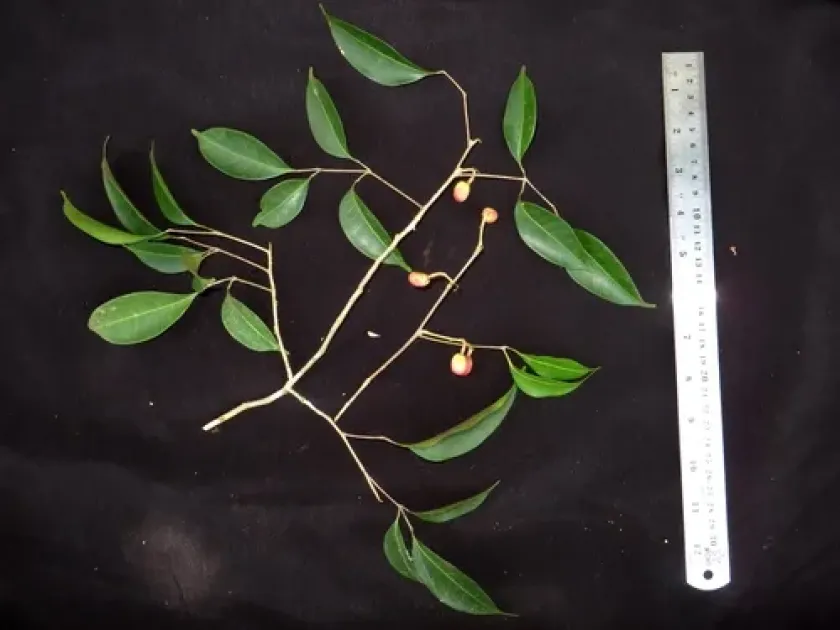
Description
Growing requirements
Santiria rubiginosa is an evergreen tree species belonging to the Burseraceae family. It is primarily native to the tropical rainforests of Southeast Asia, where it thrives in warm, humid conditions typical of equatorial regions.
The plant requires deep, well-drained soils to support its substantial growth. It is highly sensitive to waterlogging, necessitating environments where moisture is abundant but does not stagnate in the rhizosphere for extended periods.
Botanically, this species is noted for its smooth bark and characteristic leaves that feature a rusty-brown appearance on the underside, which serves as a key identifying trait in the field.
Economically, Santiria rubiginosa is highly valued for its timber. The wood is utilized in various construction and furniture-making applications due to its durability, density, and resistance to environmental stress.
As a significant component of its native forest ecosystem, the tree also plays a vital role in carbon sequestration and habitat provision for diverse tropical flora and fauna species.
Main diseases and pests
Like many tropical timber trees, Santiria rubiginosa is susceptible to various fungal pathogens that can lead to leaf spot diseases when air circulation is poor and humidity levels remain persistently high.
Wood-boring insects represent a major threat to the commercial value of the timber. These pests can infest the trunk, causing significant structural damage that renders the wood unfit for high-quality carpentry.
Habitat loss due to large-scale deforestation and conversion of forest land into agricultural zones poses a severe risk to the natural distribution and long-term viability of the species.
Young saplings often struggle against aggressive competition from fast-growing weeds and climbing vines, which can shade out the light needed for early development.
Effective management strategies typically focus on maintaining sustainable forestry practices and regular site inspections to mitigate the spread of localized pest infestations.