
Senegambia sansevieria
Sansevieria senegambica
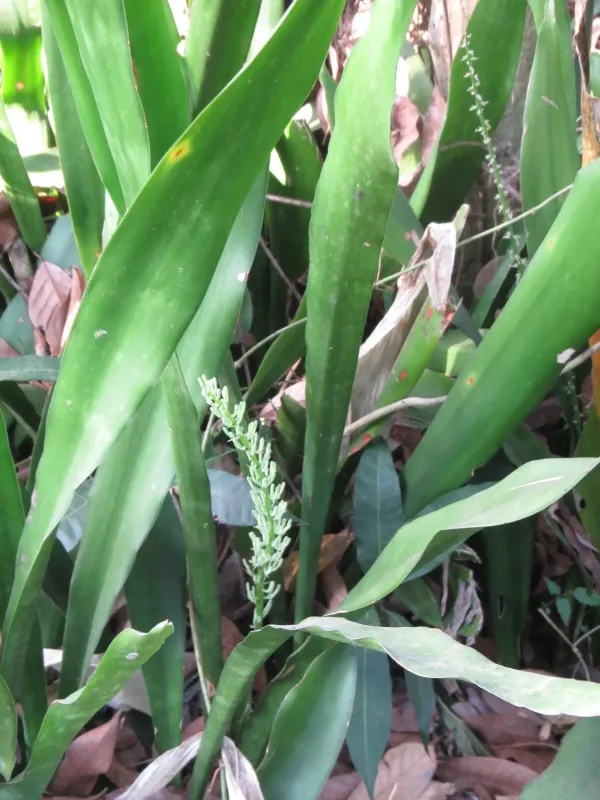
Description
Growing requirements
Senegambia sansevieria (Sansevieria senegambica) is a perennial herbaceous plant belonging to the Asparagaceae family. It is recognized for its robust, sword-shaped leaves that contain high-quality natural fibers.
The species originates from the tropical regions of West Africa, specifically Senegal and The Gambia. It is adapted to savannah-like environments, showing excellent drought tolerance and the ability to thrive in poor, sandy soils.
Climatic requirements involve warm temperatures throughout the year, ideally ranging from 20 to 30 degrees Celsius. The plant is extremely frost-sensitive and requires a frost-free environment to maintain steady growth cycles.
Regarding soil, the plant prefers well-drained, sandy, or stony substrates. It performs poorly in heavy clay soils where water accumulation can trigger root rot, which is the primary factor limiting its commercial expansion.
Agrotechnical practices are relatively straightforward, focusing on ensuring proper aeration of the soil and minimal competition from weeds during the establishment phase of the plantation.
Yield
The primary economic value of Sansevieria senegambica lies in the extraction of long, tough fibers from the leaves. These fibers are traditionally used for making ropes, coarse textiles, and high-tensile nets.
Industrial utilization is driven by the durability of the fiber, which is resistant to fungal decay and tension. As global demand for natural, biodegradable industrial materials rises, this crop gains renewed interest.
Harvesting is typically done manually or with specialized mechanical harvesters that cut leaves at the base. Yields are maximized when plants are harvested at their peak maturity, generally every 12 to 18 months depending on local conditions.
Post-harvest processing involves stripping the pulp from the fibers, a process that can be achieved through mechanical decortication. Efficiency in this step is crucial for maintaining the quality and strength of the fibers.
Beyond fiber, the plant provides secondary benefits, including soil erosion prevention in arid environments and potential pharmaceutical applications for various extracts derived from its rhizomes.
Main diseases and pests
The most significant threat to production is phytopathogenic fungi that cause root rot, especially during the rainy season. Proper plantation layout and drainage management are essential to mitigate these risks.
Insect pests such as mealybugs and spider mites can colonize the dense leaf bases. If left unmanaged, these pests can cause significant leaf damage, reducing both the quality and quantity of the fiber yield.
Integrated pest management (IPM) is recommended, prioritizing biological controls and cautious use of pesticides to ensure the long-term health of the soil ecosystem.
Regular inspection of the plantations allows for early detection of viral or bacterial leaf spot diseases, which can spread rapidly under high-humidity conditions.
- Proper plantation spacing
- Efficient field drainage
- Monitoring of pest populations
- Use of disease-resistant planting stock