
Sansevieria bacularis
Sansevieria bacularis
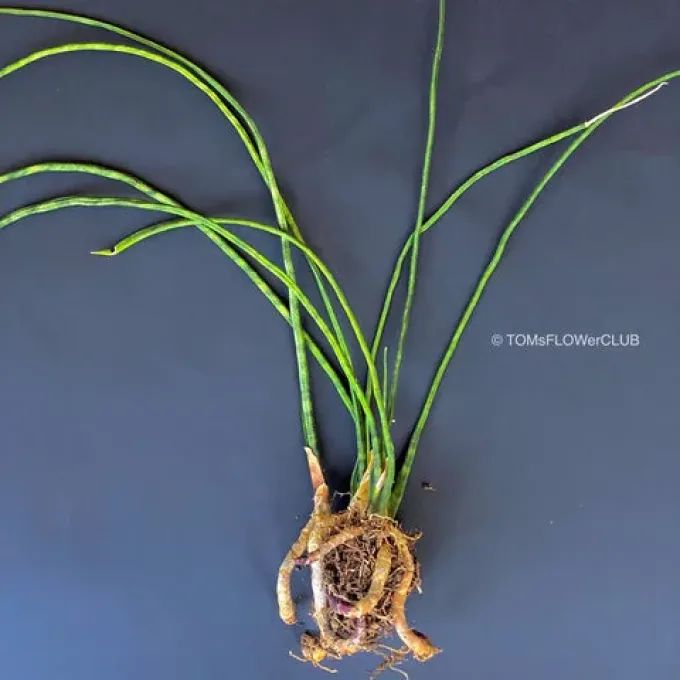
Description
Growing requirements
Sansevieria bacularis is a perennial succulent plant belonging to the Asparagaceae family. Native to tropical regions of Africa, it has evolved to thrive in arid environments with well-drained, rocky or sandy soils.
The plant features distinct, thin, cylindrical leaves that grow vertically from a rhizome. Its architectural structure makes it a popular choice for modern interior landscaping, as it maintains a clean and upright appearance throughout its growth cycle.
The culture requires a porous, well-aerated potting mix to ensure the root system is not subjected to standing water. A mixture designed for cacti and succulents is ideal, as it allows for rapid drainage after irrigation.
Regarding environmental conditions, it prefers bright, indirect light but exhibits high adaptability to various indoor light levels. The temperature range for optimal growth is between 20°C and 25°C, with the plant being sensitive to frost and extreme cold.
Host-plant utility is primarily centered in the ornamental sector. Beyond aesthetics, it is highly valued for its air-purifying properties, making it a functional component for residential and office interior design projects.
Main diseases and pests
Root rot is the most significant threat to Sansevieria bacularis, typically triggered by overwatering or poor drainage. This condition quickly affects the rhizome, leading to tissue softening and potential plant collapse.
Mealybugs and spider mites are common pests that target the plant, particularly in low-humidity indoor environments. These pests reside between leaves, feeding on plant sap and causing yellowing or tissue deformation.
Effective pest management involves mechanical removal of insects followed by the application of appropriate systemic insecticides. It is essential to ensure that water does not pool in the center of the leaf rosette, as this creates a breeding ground for pathogens.
Lack of light and improper substrate compaction are primary agronomic stressors that inhibit healthy growth. When the plant does not receive adequate care, its leaves may lean or lose their firm, upright structure, diminishing its quality.
Regular maintenance practices, including controlled watering cycles and seasonal monitoring, are critical for preventing disease outbreaks. Maintaining a clean environment around the pots prevents the accumulation of pathogens and pests.