
Sakhalin fir
Abies sachalinensis (F. Schmidt) Mast.
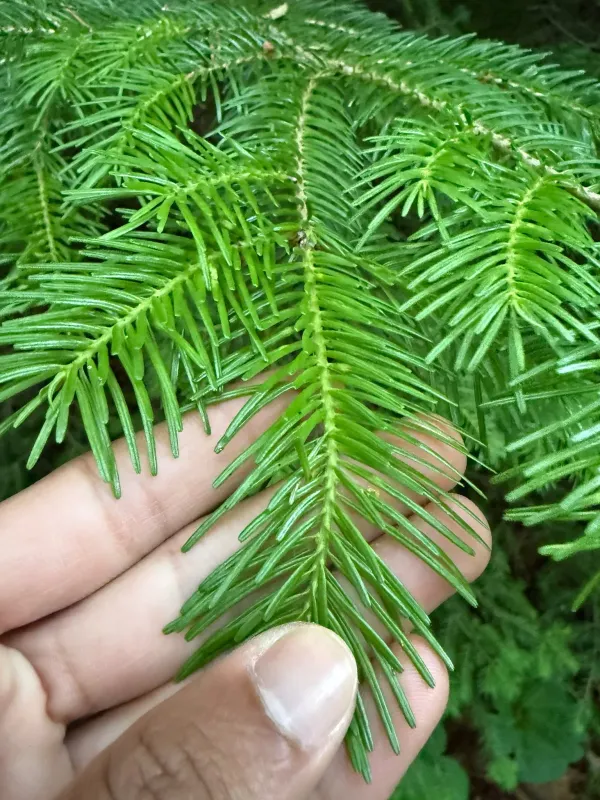
Description
Growing requirements
Sakhalin fir (Abies sachalinensis) is an evergreen coniferous tree belonging to the Pinaceae family. Native to the Sakhalin and Kuril Islands, this species is well-adapted to cold, maritime climates with high humidity levels.
The tree thrives in cool, moist, and well-drained acidic soils. It does not tolerate waterlogging or heavy, compacted soils, which can lead to root suffocation and increased susceptibility to decay.
Regarding climate, the Sakhalin fir is highly frost-hardy and prefers regions where summer temperatures remain moderate. It suffers significantly in hot, dry conditions, which often lead to premature needle desiccation.
In terms of light requirements, the species is classified as shade-tolerant, especially in its juvenile stage. As it matures, it can tolerate more exposure but generally prefers protection from strong, drying winds.
Management practices should prioritize soil moisture conservation through mulching, particularly for young plantations. Fertilization should be balanced to support growth without promoting excessive, succulent shoots prone to winter injury.
Main diseases and pests
The species is susceptible to various needle cast diseases, particularly under conditions of high humidity and poor air circulation. Proper spacing between trees is critical to reducing the spread of fungal spores.
Pests such as the balsam woolly adelgid and various bark beetles represent significant threats. Regular monitoring of the foliage and bark integrity is necessary to detect infestations before they become critical.
Root rot, often caused by Phytophthora species, can occur in poorly drained sites. Ensuring correct site selection and drainage management is the primary defense against such soil-borne pathogens.
Mechanical damage to the thin bark of young trees facilitates the entry of pathogens. Protective measures, including the use of deer guards or protective wraps, are essential in areas with wildlife pressure.
Integrated pest management (IPM) strategies, combining biological controls and targeted chemical treatments, are recommended for large-scale forestry operations to ensure the long-term health of the stand.