
Woolly distaff thistle
Carthamus lanatus L.
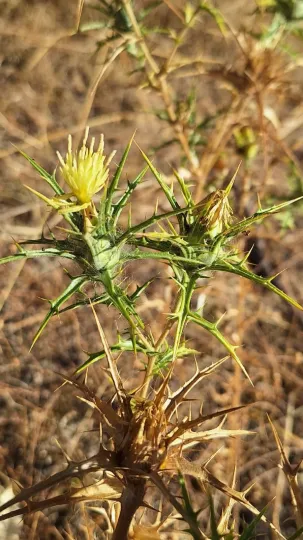
Description
Sowing dates
The woolly distaff thistle is a drought-tolerant plant, with sowing typically scheduled in early spring. Optimal timing occurs when the soil temperature at seed depth reaches +8…+10°C.
Early sowing allows the crop to effectively utilize winter moisture reserves for the development of its primary root system. Delaying sowing can lead to poor emergence due to surface soil drying.
The seeding rate ranges from 40 to 60 kg per hectare, depending on soil fertility and planting methods. Standard row spacing of 15–20 cm is common to ensure proper stand density.
Seed depth is critical: 5–7 cm for lighter soils and 3–5 cm for heavier clay-loam soils. Proper placement ensures uniform germination and minimizes risks from temperature fluctuations.
Post-sowing packing is highly recommended to improve soil-to-seed contact. This practice promotes moisture movement towards the seeds, which is vital in arid agricultural regions.
Growing requirements
Belonging to the Asteraceae family, the woolly distaff thistle shows remarkable adaptability to various soil types. It performs well on chestnut and chernozem soils and tolerates moderate salinity.
The crop requires full sun exposure throughout the growing season. Shading negatively impacts oil accumulation in the seeds and stunts the overall development of the plant.
Climatic requirements are modest; the plant thrives in high-temperature environments with low relative humidity. This makes it a suitable candidate for arid and semi-arid cropping zones.
Soil aeration and drainage are essential for success. Waterlogged or poorly drained fields should be avoided, as they promote root rot and significantly reduce yield potential.
Effective weed control is required during the early vegetative phase. Because the plant grows slowly in its initial stages, it is vulnerable to competition from aggressive weeds.
Yield
The grain yield of the woolly distaff thistle under standard field conditions typically ranges from 0.8 to 1.5 metric tons per hectare. Performance is influenced by seasonal rainfall and agricultural care.
Yield stability is maintained by a deep taproot system, which allows the plant to access deep soil water sources. This trait is particularly valuable in years with frequent drought.
The number of seeds per head is influenced by the variety's biology and the success of insect pollination. Bee activity plays a significant role in improving the fill rate of the seed heads.
Oil content in the seeds generally varies between 25% and 35%. Maintaining high seed quality requires careful harvesting and minimizing damage during threshing operations.
Crop rotation with cereals or row crops helps maintain soil health and increases potential yields. Using legumes as predecessors can further improve nitrogen availability for the thistle crop.
Main diseases and pests
Common diseases include rust and Fusarium wilt. Prevention relies on sourcing disease-free seeds, ensuring good field drainage, and strictly adhering to crop rotation schedules.
Pests like the safflower fly and various aphids can cause significant damage to young leaves and developing buds. Integrated pest management is necessary to balance protection and beneficial insects.
Viral diseases, often transmitted by aphid populations, can deform plant tissues and hinder growth. Controlling vector populations is the primary method for managing viral outbreaks.
Gray mold can develop in humid conditions, particularly during the flowering phase. This fungus affects the seed heads, making them unsuitable for harvest or processing.
- Maintain appropriate field isolation to reduce disease spread.
- Remove and destroy crop residues post-harvest to interrupt pest life cycles.
- Apply fungicides only when economic thresholds are reached.
Harvesting
Direct combining is the standard method for harvesting the woolly distaff thistle at full maturity. Seed moisture content should be kept between 10% and 12% for safe harvesting.
Signs of maturity include brittle, dry seed heads and yellow-brown stems. In this state, seeds are easily separated from the flower structure, facilitating the threshing process.
Combine settings must be carefully adjusted to prevent seed coat damage. Drum speed should be calibrated based on the crop's dryness to ensure minimal breakage.
Delayed harvesting risks seed shattering due to wind or mechanical disturbances. Efficiency during the harvest window is crucial to maximizing the harvested volume.
Post-harvest cleaning is essential to remove trash and chaff, which significantly reduces the risk of heating and mold formation during storage. Dry storage conditions preserve oil quality.