
Glaucous safflower
Carthamus glaucus M. Bieb.
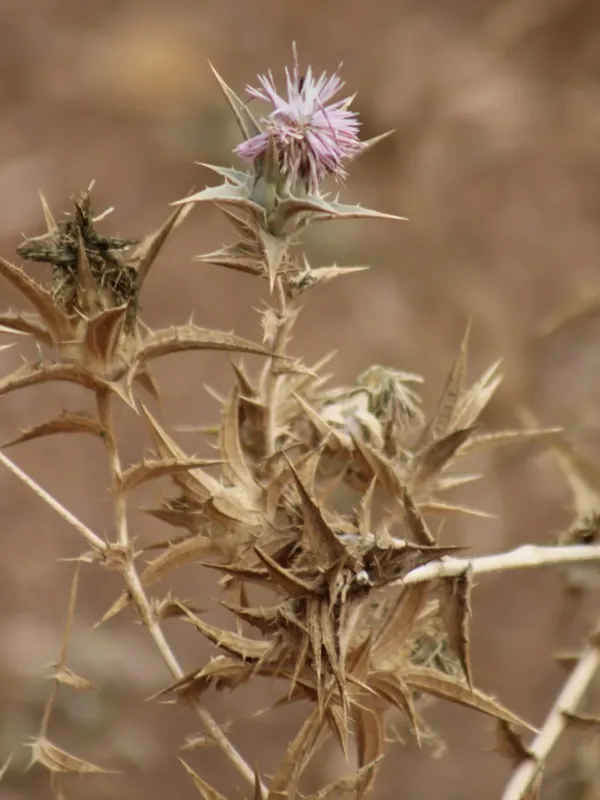
Description
Sowing dates
Glaucous safflower is a member of the Asteraceae family, well-adapted to arid and semi-arid climates where traditional crops often fail due to insufficient rainfall.
The sowing process begins in early spring, typically when soil temperatures reach 5–7 degrees Celsius, allowing the plant to leverage early spring moisture effectively.
Optimal row spacing ranges between 30 and 45 centimeters, which provides sufficient space for the root system development and optimizes field management operations.
Seeds are sown at a depth of 3 to 5 centimeters; precise depth control is vital for ensuring uniform seedling emergence and establishing a robust crop stand.
Early-season vigor is a key trait of this species, which helps the crop establish itself quickly and outcompete weeds during the initial stages of development.
Growing requirements
This crop is highly prized for its exceptional drought resistance, attributed to a deep taproot that allows it to access subsoil water reserves inaccessible to other plants.
It thrives in high-light environments and requires long, sunny days during the vegetative period to achieve maximum photosynthetic efficiency and oil content.
Well-drained soils, such as loams and chernozems, are preferred, although the plant shows remarkable tolerance to moderately saline and degraded soil conditions.
Avoid planting in heavy clay soils or areas prone to waterlogging, as excessive soil moisture can lead to root rot and severely hinder the crop's development.
Temperature sensitivity is relatively low, making it a reliable choice for regions where extreme summer heat would inhibit the growth of less tolerant oilseeds.
Yield
Depending on local agronomic conditions and precipitation levels, the average yield for Glaucous safflower typically ranges from 8 to 15 centners per hectare.
The primary economic output is high-quality vegetable oil, which is valued for its specific fatty acid profile, including high levels of beneficial linoleic acid.
Beyond oil production, the meal and cake byproducts are valuable sources of protein for livestock feed, effectively utilizing the entire plant material after processing.
The flowers contain natural pigments used in the cosmetic and textile industries, providing an additional source of revenue for agricultural producers.
As a stable crop, it provides a consistent return on investment even in years when erratic weather conditions limit the profitability of other traditional cereals.
Main diseases and pests
Fungal diseases, including rust and fusarium wilt, are the most common threats, especially when humidity levels remain high during the flowering and maturation stages.
Pests such as the safflower fly can cause significant damage to seed heads; therefore, vigilant monitoring is required throughout the growing season.
Integrated pest management (IPM) strategies, including crop rotation and the use of resistant varieties, are essential to minimize the reliance on chemical insecticides.
Proper field hygiene and the removal of weed hosts are critical steps in preventing the buildup of disease inoculum and pest populations in agricultural fields.
Adherence to recommended plant density helps prevent canopy overcrowding, which is a major factor in reducing the microclimate humidity that favors pathogen growth.
Harvesting
Harvesting is performed via direct combining when the plants reach full maturity, indicated by dry heads and a seed moisture content of approximately 10-12 percent.
Adjusting the combine harvester settings is critical to minimize mechanical seed damage, as the hulls of safflower seeds are sensitive to high impact during threshing.
Timed harvesting is necessary to prevent significant yield losses due to seed shattering, which can occur if the crop is left standing in the field for too long.
Post-harvest cleaning and drying are mandatory to ensure that the moisture levels are suitable for long-term storage and to maintain the quality of the seed oil.
Effective storage practices, including controlled temperature and humidity, help preserve the chemical integrity and market value of the harvested seed lot.