
Safflower
Carthamus oxyacanthus M. Bieb.
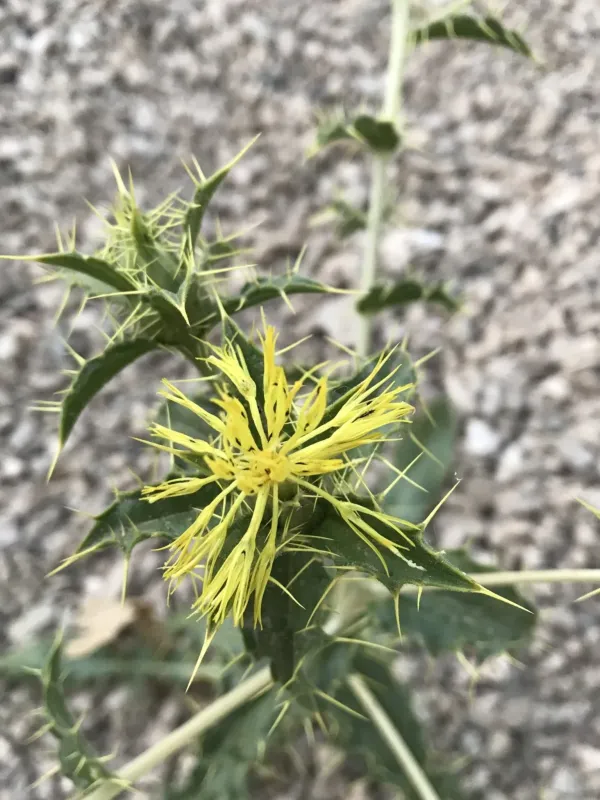
Description
Sowing dates
Safflower (Carthamus oxyacanthus) belongs to the Asteraceae family. It is a highly drought-tolerant annual plant widely adapted to arid and semi-arid climates, valued for its oil-rich seeds and medicinal properties.
Sowing typically begins in early spring once soil temperatures reach 5–8 degrees Celsius. Early planting allows the crop to establish a deep taproot system, enabling it to access subsoil moisture during peak summer heat.
The seeding rate varies between 30 and 50 kg per hectare, depending on regional soil conditions and the targeted plant density. Seeds are generally sown at a depth of 4 to 6 cm to ensure access to sufficient soil moisture for germination.
High-quality soil preparation is beneficial, although safflower is more resilient to poor seedbeds than many other traditional field crops. Proper field leveling is crucial for efficient mechanical sowing and future harvesting operations.
Rolling the field after planting is a common practice to ensure good seed-to-soil contact. This step is particularly important in drier regions where uniform moisture distribution is essential for successful seedling emergence.
Growing requirements
Safflower thrives in full sunlight and is exceptionally resistant to high temperatures and low relative humidity. It is an ideal crop for regions where heat stress and water scarcity prevent the cultivation of standard grain crops.
The crop prefers well-drained loamy, sandy, or clay-loam soils with a neutral pH. It exhibits significant tolerance to soil salinity, allowing farmers to utilize land that might be unsuitable for more sensitive plant species.
Waterlogging is detrimental to safflower, as it leads to root rot and poor development. Therefore, selecting fields with excellent drainage and avoiding low-lying areas is a primary requirement for a successful harvest.
While the plant is hardy, it requires a long growing season to reach full maturity. The total duration of the vegetative period depends on the specific cultivar, typically ranging from 100 to 140 days under normal conditions.
Effective weed control during the first few weeks is the most intensive part of safflower management. Once the plants form a closed canopy, they are highly competitive and can suppress most weeds without additional intervention.
Main diseases and pests
Rust and leaf spot are the most prevalent diseases affecting safflower, especially during periods of high humidity. Proactive monitoring and the application of appropriate fungicides are necessary to protect the leaf surface.
Fusarium wilt is a serious soil-borne pathogen that can cause sudden plant collapse. Implementing a crop rotation cycle of at least 3–4 years is the best strategy to prevent build-up of this fungus in the field.
The safflower fly is a primary pest whose larvae feed inside the flower heads, directly impacting seed yield. Chemical control targeting the bud stage is often the most effective method for managing this threat.
Aphids and various bug species can also cause damage to young shoots and leaves. Regular inspections allow for early detection and targeted treatments, minimizing the need for broad-spectrum insecticide applications.
Choosing resistant cultivars is the cornerstone of effective disease management in safflower. Seed treatment before planting provides an additional layer of protection against early-stage infections and ensures a healthier stand.
Harvesting
Harvesting is performed using standard combine harvesters when the plants are fully mature. The crop is ready when the flower heads turn brown and the moisture content of the seeds drops to approximately 10-12 percent.
Precision is key during harvest to minimize seed shattering and loss. Adjusting the combine's cylinder speed and concave clearance is essential to prevent mechanical damage to the seeds during the threshing process.
Yields typically range from 0.8 to 1.5 metric tons per hectare under dryland conditions. With proper irrigation or optimal rainfall, yields can be significantly higher in specific agricultural environments.
Post-harvest handling involves cleaning the seeds to remove debris and fine plant material that could trigger heating in storage. Seeds should be stored in cool, dry conditions to maintain oil quality for the long term.
The economic value of safflower lies in its high-quality vegetable oil, which is used for cooking and industrial applications. Furthermore, the petals are often harvested for natural pigments, adding a secondary revenue stream for producers.