
Rostraria smyrnacea
Rostraria smyrnacea
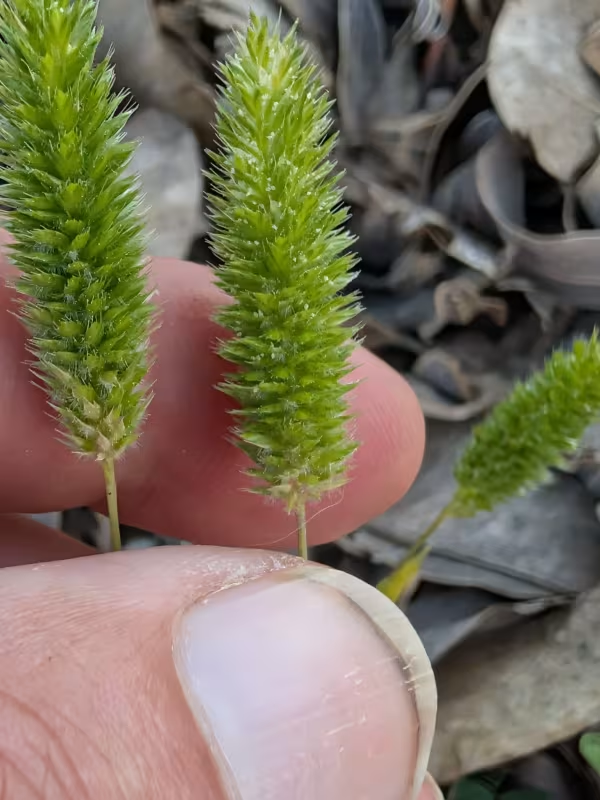
Description
Growing requirements
Rostraria smyrnacea is a perennial grass species belonging to the Poaceae family. It is recognized for its ability to thrive in harsh environments, often colonizing arid and semi-arid regions.
The plant exhibits a preference for well-drained, sandy, or rocky soil profiles. Its adaptation to low-moisture environments is supported by an efficient root system that penetrates deep into the soil structure.
Botanically, it features a distinct spike-like panicle, which is a key characteristic for identification. The foliage is narrow and relatively sparse, reflecting its adaptation to minimizing water loss through transpiration.
Climatic requirements are primarily centered around a need for high light intensity and moderate to warm temperatures during the spring growth phase. It is highly sensitive to waterlogging, which can lead to rapid decline.
In terms of agricultural utility, it serves as a robust component of natural pastures. It is valued by agronomists for its potential to stabilize soil and provide forage in challenging sites where more delicate crops fail.
Main diseases and pests
Common threats to Rostraria smyrnacea include rust diseases, which typically appear during periods of high humidity and suboptimal air circulation within the plant canopy.
Insect pests, such as aphids and thrips, frequently target the floral parts, causing damage that negatively impacts the production of viable seeds and reduces overall stand vigor.
Soil-borne pathogens may cause rot if the grass is cultivated in soils that lack proper drainage, highlighting the necessity of site selection in any agricultural context.
Overgrazing poses a significant risk to the longevity of the stand. Without sufficient recovery periods, the plant's ability to regenerate its vegetative biomass is severely hampered.
Effective management requires regular scouting for signs of chlorosis or fungal lesions, particularly in areas where climate change leads to increased rainfall during traditionally dry seasons.