
Mediterranean hairgrass
Rostraria cristata
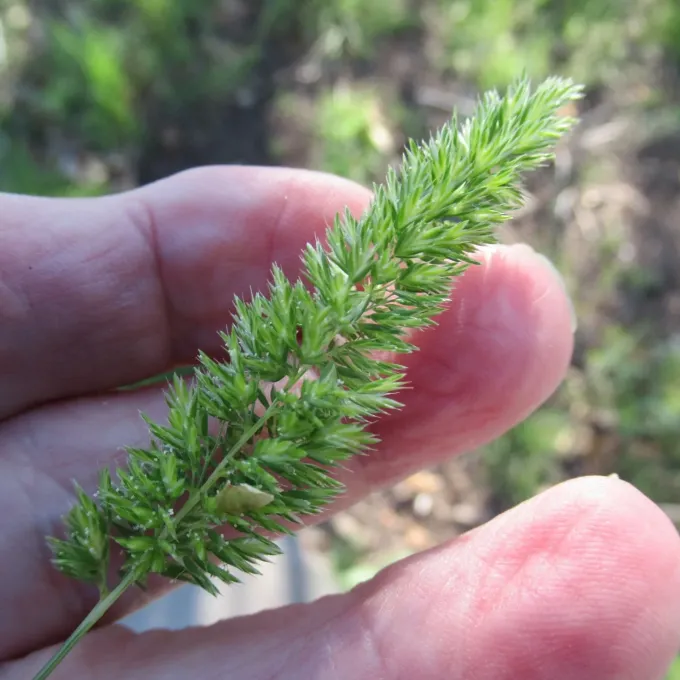
Description
Growing requirements
Mediterranean hairgrass (Rostraria cristata) is an annual grass species belonging to the Poaceae family. It is recognized for its significant ecological role and its utility as a resilient component in pasture ecosystems, particularly in arid and semi-arid environments.
Originating from the Mediterranean basin, this grass has successfully naturalized across diverse regions worldwide. It is typically found in open habitats, meadows, and areas where soil quality might be limiting for more demanding crop species.
The crop thrives in well-drained, light-textured soils including sandy and gravelly substrates. Its ability to tolerate low-fertility soils makes it a preferred species for land reclamation projects and the improvement of marginal agricultural fields.
Regarding climate, the plant requires significant exposure to sunlight and is highly adapted to temperate zones with distinct dry seasons. Its phenology allows it to complete its growth cycle efficiently, capitalizing on early season precipitation before summer heat arrives.
In farming, it is primarily valued for its forage quality during the early growth stages. It provides essential nutrition for grazing livestock, helping to stabilize pasture productivity in regions where rainfall is erratic or minimal.
Main diseases and pests
Mediterranean hairgrass exhibits natural resistance to many common cereal pathogens. Due to its rugged nature, it rarely suffers from major outbreaks of rust or powdery mildew unless environmental conditions are exceptionally humid or stagnant.
Pest management focuses primarily on preventing localized infestations of aphids or cereal beetles during the early spring. Monitoring vegetation density and ensuring balanced grazing pressure is usually sufficient to mitigate most potential biotic threats.