
Rhynchospora malasica
Rhynchospora malasica
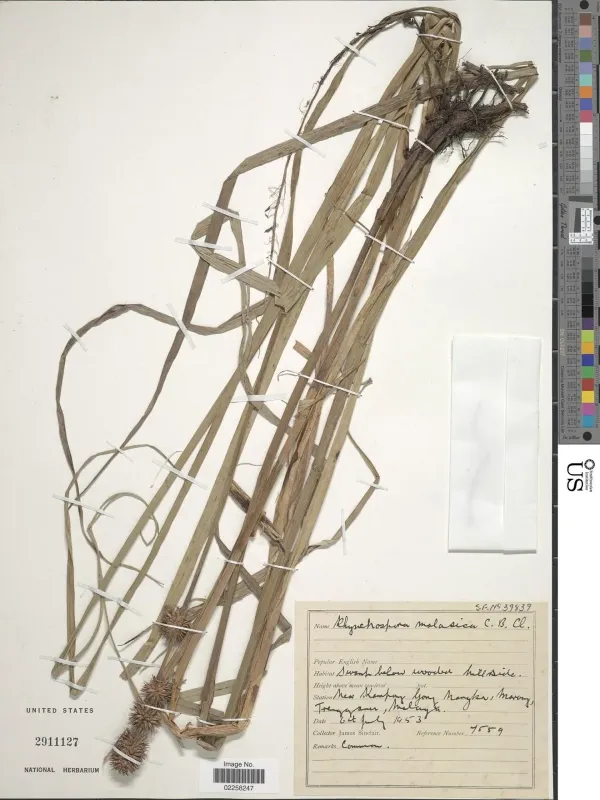
Description
Growing requirements
Rhynchospora malasica is a perennial herbaceous plant belonging to the Cyperaceae family. It is native to the tropical wetlands of Southeast Asia, where it plays a significant role in the local ecosystem structure.
The plant exhibits dense, tufted growth patterns with narrow, linear leaves. This architecture allows it to thrive in nutrient-poor, waterlogged soils where other crop species often fail to survive.
Agrotechnical requirements focus primarily on water management. The crop demands consistent soil moisture and is highly tolerant to periodic flooding, making it suitable for low-lying agricultural areas that are prone to inundation.
Soil quality parameters for this plant include a preference for acidic substrates with high organic content. It requires minimal fertilization due to its ability to adapt to environments with low nutrient availability.
Its primary agricultural use is focused on soil stabilization in wet habitats and as a source of biomass for specialized forage systems in tropical climates.
Main diseases and pests
Fungal pathogens represent the most significant threat to the health of the plant, especially in conditions of poor air circulation and excessive humidity, leading to leaf spot diseases.
Various insect pests, including stem borers and leaf miners, can damage the vegetative parts of the plant, potentially reducing its growth rate and biomass accumulation.
Integrated pest management strategies are recommended, emphasizing the importance of site drainage and the selection of healthy planting material to avoid the introduction of diseases.
Frequent monitoring of the plant canopy is necessary to identify early signs of nutrient deficiency or localized pest outbreaks that could spread rapidly in dense stands.
Effective management includes maintaining balanced ecological conditions and avoiding the excessive use of nitrogen fertilizers, which can make the plants more susceptible to infection.