
White beaksedge
Rhynchospora alba
Description
Growing requirements
White beaksedge (Rhynchospora alba) is a perennial member of the Cyperaceae family, typically found in temperate regions of the Northern Hemisphere. It thrives in boggy habitats, including nutrient-poor peatlands and marshy meadows.
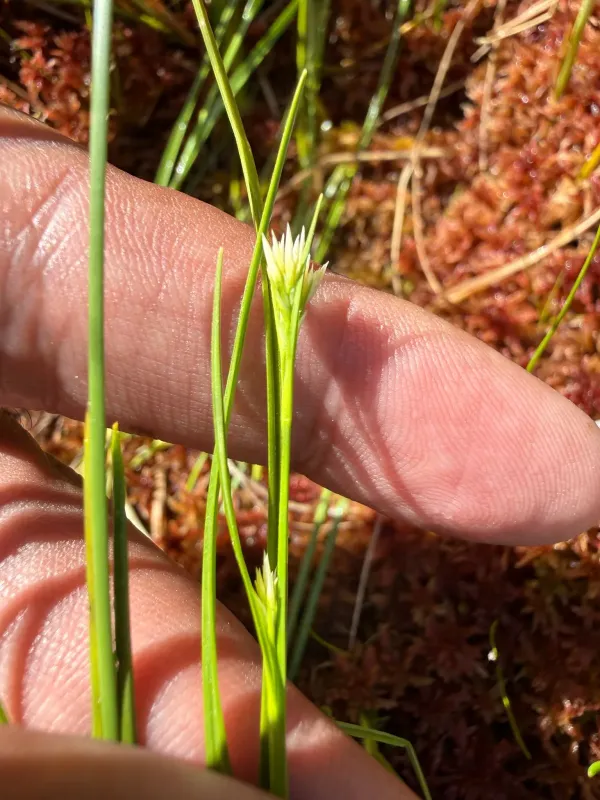
The plant is botanically identified by its dense tufted growth and narrow, grass-like leaves. Its most distinguishing feature is the cluster of white spikelets that emerge during the flowering season, providing a unique visual characteristic to the habitat.
Regarding cultivation requirements, this species demands constant moisture and high water tables. It is adapted to acidic soil conditions where standard agricultural crops would fail, making it a specialist of wetland environments.
In terms of хозяйственное использование (хозяйственное использование), white beaksedge is primarily utilized for ecological restoration and land reclamation projects. It helps stabilize unstable peat soils and supports biodiversity in rehabilitated wetland areas.
The agrotechnical approach focuses on maintaining hydro-ecological stability. Successful management requires avoiding soil aeration and ensuring that the water level remains consistently close to the surface, as the species does not tolerate long-term drought conditions.
Main diseases and pests
The main threat to white beaksedge is large-scale drainage and human land-use changes. Once the hydrological conditions are altered, the plant quickly loses its ecological niche to more aggressive, non-wetland plant competitors.
Common plant diseases are rarely reported in native habitats due to the specific acidity of the peat. However, in artificial nurseries, excessive moisture fluctuation can sometimes lead to localized fungal issues, though these are generally manageable through stable hydration levels.