
Rhynchospora holoschoenoides
Rhynchospora holoschoenoides
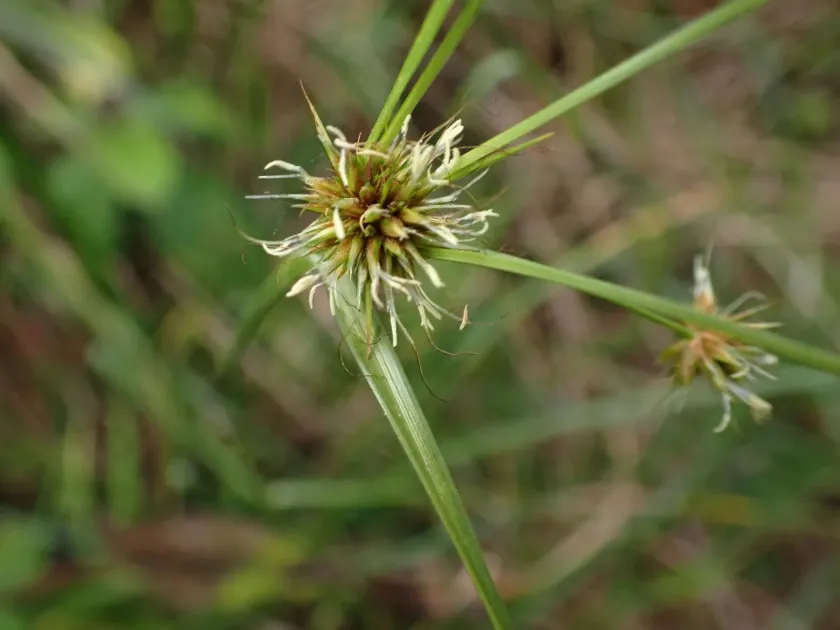
Description
Growing requirements
Rhynchospora holoschoenoides is a perennial herbaceous plant belonging to the Cyperaceae family. It is widely recognized for its adaptability to wetland environments, functioning as an essential component of local tropical and subtropical ecosystems.
The native distribution of this species spans across Central and South America. It typically thrives in moist savannas, marshes, and low-lying areas where water tables remain near the surface for extended periods during the growing season.
The species requires a tropical climate with high temperatures year-round. It is highly sensitive to frost, which limits its geographical range to regions without significant cooling periods, making it a specialized plant for tropical land management.
Soil requirements focus on moisture retention and acidity. This species performs well in acidic, nutrient-poor substrates, demonstrating resilience where other more demanding agricultural crops would fail due to waterlogging or high levels of mineral toxicity.
Botanically, the plant is characterized by tufted growth and dense, head-like inflorescences. Its leaves are stiff and linear, an adaptation that allows it to tolerate harsh wind conditions and physical stress in open landscape settings.
Yield
In agricultural settings, Rhynchospora holoschoenoides is primarily utilized for grazing and forage purposes in extensive livestock systems. It serves as a reliable biomass source in areas where land is too wet for conventional fodder crops.
The biomass yield is significantly influenced by the local hydrological cycle. With adequate moisture, the plant produces a dense cover, which can be harvested for hay, although its nutritive value is most optimal during the vegetative stage before inflorescence.
Management practices for this plant involve careful stocking density on pastures to avoid overgrazing, which could deplete the root reserves. When managed correctly, it provides a stable ground cover that persists over multiple seasons.
Beyond its forage utility, the species is valued for soil conservation. Its robust root system helps stabilize riverbanks and prevents erosion in flood-prone areas, making it a critical plant for environmental land restoration projects.
Future agricultural applications may include the utilization of its biomass for fiber production or as a substrate for bio-composting in tropical regions. Ongoing studies focus on enhancing its nutritional profile through selective breeding for better cattle feed conversion rates.