
Brown beaksedge
Rhynchospora fusca
Description
Growing requirements
Brown beaksedge (Rhynchospora fusca) is a perennial herbaceous plant belonging to the Cyperaceae family. It is predominantly found in nutrient-poor environments such as acidic bogs, fens, and the margins of wetlands, where it plays a critical role in the local vegetation structure.
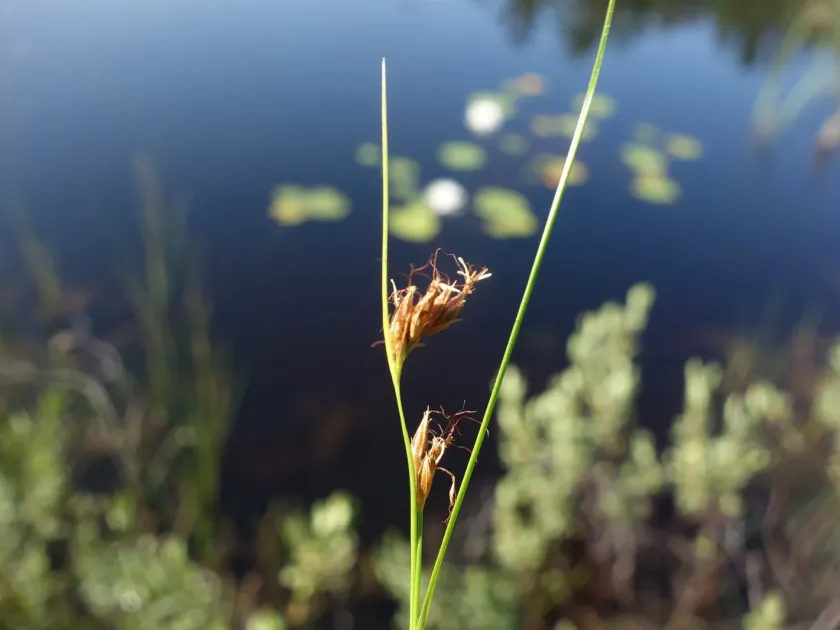
Botanically, the plant is characterized by its slender, grass-like leaves and culms that typically reach a height of 10 to 40 centimeters. The inflorescence consists of dark brown spikelets, which are arranged in clusters, distinguishing it from other members of the Rhynchospora genus through its specific color and spikelet morphology.
Regarding its environmental requirements, the plant thrives in acidic, waterlogged substrates. It demonstrates a high tolerance for stagnant water conditions but requires specific nutrient-poor (oligotrophic) soil profiles to outcompete more aggressive wetland flora. It does not perform well in alkaline or highly fertilized agricultural fields.
Climate-wise, the species is adapted to temperate regions of Europe and North America. It prefers high atmospheric humidity and stable hydrological conditions throughout the growing season. The plant's ability to survive in water-saturated soils makes it a specialist in its ecological niche, rather than a versatile agricultural crop.
While brown beaksedge does not have direct commercial value in traditional food production or fodder, it is essential for wetland restoration and biodiversity conservation. Its presence is often used by agronomists and ecologists as a biological marker for the health and succession stages of peatland habitats.