
Rhipsalis teres
Rhipsalis teres (Vell.) Steud.
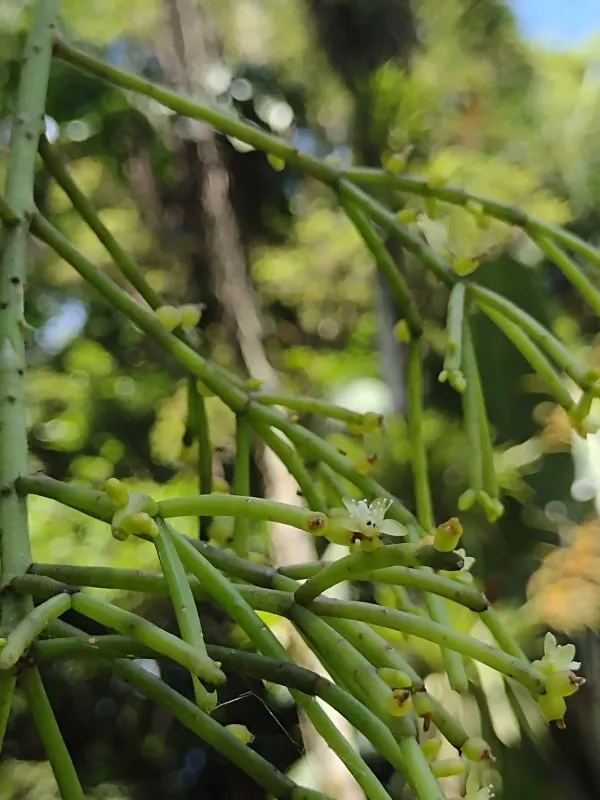
Description
Growing requirements
Rhipsalis teres is a fascinating member of the Cactaceae family, native to the tropical rainforests of Brazil. As an epiphytic cactus, it naturally grows on tree branches, adapting to filtered light conditions and high humidity typical of its native environment.
The plant requires bright, indirect light to thrive. While it belongs to the cactus family, it cannot tolerate intense, direct sun, which causes stem scorching. North-facing or shaded east-facing windows are ideal for maintaining a vibrant green color throughout the year.
A well-draining, airy potting medium is crucial for the health of Rhipsalis teres. A mixture consisting of peat, pine bark, perlite, and a small amount of charcoal ensures that the roots receive sufficient oxygen while preventing water accumulation.
Temperature management is key to successful cultivation. The species prefers temperatures between 20°C and 25°C during the growing season. It is essential to protect the plant from cold drafts, especially during the winter months, to prevent tissue damage.
Watering practices should mimic tropical conditions: keep the soil consistently moist but never waterlogged. Allow the top third of the potting mix to dry out before watering again to ensure the root system remains healthy and free from fungal stress.
Main diseases and pests
Mealybugs are the most common pests affecting Rhipsalis teres. These insects often hide in the joints of the cylindrical stems, making them difficult to detect until a significant infestation occurs. Regular inspection and treatment with horticultural oils are recommended.
Spider mites are another major threat, particularly in environments with low humidity. Infested plants may show signs of stippling or webbing; increasing humidity levels and using appropriate miticides can effectively manage these populations.
Root rot, caused by Phytophthora or Pythium species, occurs primarily due to poor soil drainage or overwatering. Symptoms include mushy stem bases and a sudden collapse of the plant structure, which often requires repotting in fresh, sterile substrate.
Scale insects can also colonize the stems, creating hardened brown bumps that drain the plant's resources. Manual removal with a cotton swab dipped in rubbing alcohol is an effective control measure for localized infestations.
Nutrient deficiencies often manifest as yellowing segments or stunted growth. Providing a balanced, dilute liquid fertilizer during the active growing season is vital to maintain vigor and resistance against opportunistic pathogens.