
Rhipsalis ewaldiana
Rhipsalis ewaldiana Barthlott & N. P. Taylor
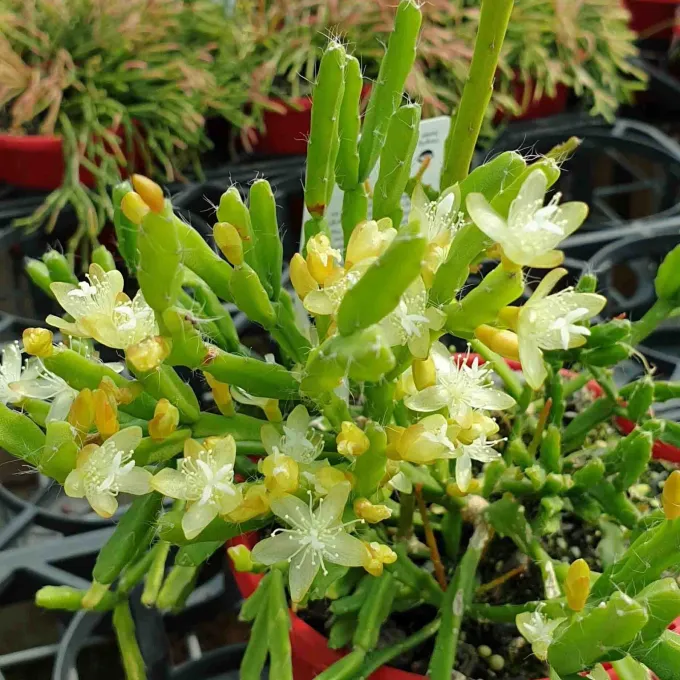
Description
Growing requirements
Rhipsalis ewaldiana is a distinctive epiphytic cactus belonging to the Cactaceae family. It originates from the tropical rainforests of Brazil, where it thrives by growing on trees or rocky crevices, absorbing moisture from the surrounding humid air.
Botanically, this species is characterized by its slender, pendulous, and highly branched stems. The stems are typically green and flexible, creating a cascading growth habit that makes it highly popular for hanging baskets and vertical displays.
Cultivation requires a specialized, well-draining soil mix rich in organic matter. A mixture of peat, perlite, and pine bark is ideal, as it mimics the natural substrate found in tree bark cavities and prevents root suffocation.
In terms of climate, Rhipsalis ewaldiana prefers bright, indirect light conditions. Direct sunlight is harmful as it scorches the stems, while deep shade inhibits proper growth and blooming. It requires constant ambient temperatures between 18 and 24 degrees Celsius.
Water management is critical for this species. During the active growing season, the substrate should be kept consistently moist but never waterlogged. During winter, reduce watering significantly to allow the plant a resting phase, which encourages future flowering.
Main diseases and pests
The most common pests affecting this cactus are mealybugs and spider mites, which thrive in dry environments. Regular inspection of the stem joints and cleaning the plant with a mild solution can help prevent infestations.
Root rot is the primary disease risk for this cultivar. It is typically caused by overwatering or poor drainage systems. Maintaining appropriate soil aeration and ensuring excess water is discarded from the saucer can effectively mitigate these threats.