
Rhipsalis clavata
Rhipsalis clavata F. A. C. Weber
Description
Growing requirements
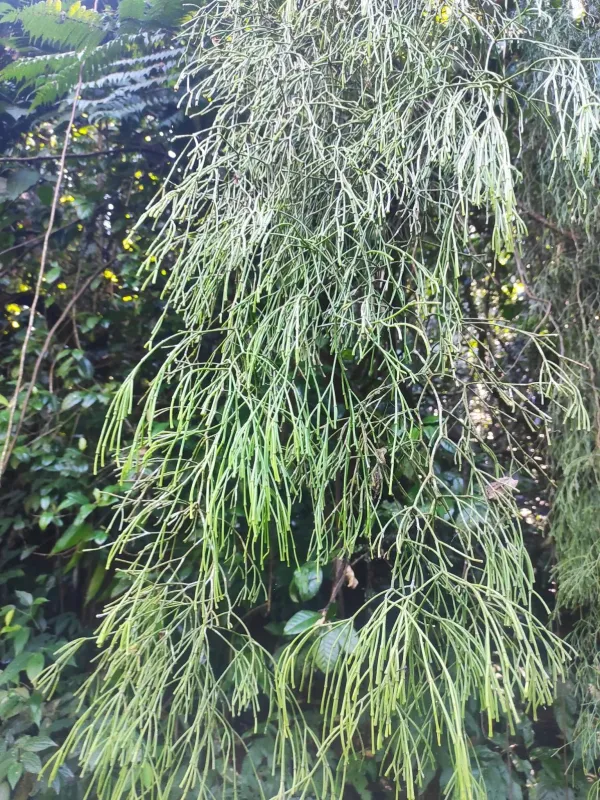
Rhipsalis clavata is a distinctive epiphytic cactus belonging to the Cactaceae family. It is native to the tropical forests of Brazil, where it naturally inhabits tree trunks and branches as an epiphyte, absorbing nutrients from accumulated organic matter.
The plant is defined by its segmented, club-shaped stems that exhibit a unique branching pattern. These segments are typically bright green and have a succulent texture, allowing the plant to store water efficiently in its natural forest habitat.
Regarding environmental requirements, this species thrives in bright, indirect light conditions. Direct sunlight is generally too intense and can lead to bleaching or scorching of the sensitive photosynthetic tissues of the stems.
The growing medium must be highly porous and well-draining to prevent root asphyxiation. A mixture incorporating orchid bark, perlite, and high-quality peat moss is recommended to simulate the airy growing conditions found in the tree canopy.
Standard agrotechnical management involves keeping the soil consistently moist but never waterlogged. High ambient humidity is critical for the long-term health of the plant, often necessitating the use of humidifiers or regular misting of the foliage.
Main diseases and pests
The most significant insect threats to this species include mealybugs and scale insects. These pests often congregate at the joints of the stem segments, draining plant sap and causing stunted development if not addressed promptly with horticultural oils.
Root rot remains the most serious pathological threat, often induced by cold temperatures coupled with excessive moisture. Maintaining an optimal temperature range and ensuring the substrate dries out sufficiently between waterings is essential for disease prevention.