
Rhipsalis lindbergiana
Rhipsalis lindbergiana K. Schum.
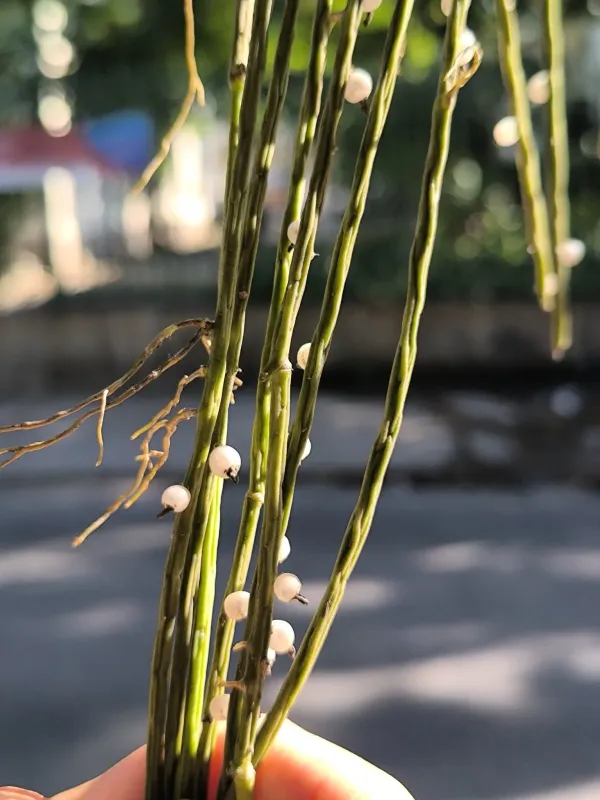
Description
Growing requirements
Rhipsalis lindbergiana belongs to the Cactaceae family and is recognized as a distinctive epiphytic jungle cactus. Originating from the humid forests of Brazil, this species naturally thrives by attaching itself to tree branches or rocky crevices.
The plant features thin, cylindrical, branching stems that create elegant, cascading curtains. Botanical experts appreciate this culture for its unique morphology and small, delicate flowers that emerge along the stem segments.
For successful agricultural management, the plant requires bright, filtered light. Exposure to intense, direct afternoon sunlight should be strictly avoided to prevent scorching the delicate green tissues of the stems.
The soil substrate must be highly porous and well-draining to mimic the natural epiphyte environment. A mix of peat, pine bark, and coarse perlite provides the necessary aeration and moisture retention balance.
Maintaining high humidity is essential for this species. During the active growing season, regular misting and stable temperatures between 20–25 degrees Celsius ensure healthy development and vigorous growth.
Main diseases and pests
Spider mites are the most common pest observed in Rhipsalis lindbergiana, particularly during periods of low atmospheric humidity. They thrive on the undersides of stems and can cause significant damage.
Mealybugs can also infest the plant, hiding in the small crevices between segments, which makes manual control challenging and necessitates systemic insecticide treatments.
Root rot, driven by overwatering and poor drainage, remains the most critical threat to the longevity of the plant, often leading to rapid tissue collapse.
To mitigate disease risks, always ensure that the soil reaches a state of partial dryness between waterings and avoid letting the pot sit in standing water.
Regular monitoring and physical cleaning of the stems are the best preventative measures to maintain the health and vigor of this epiphytic collection.