
Rhipsalis baccifera
Rhipsalis baccifera (J. S. Muell.) Stearn
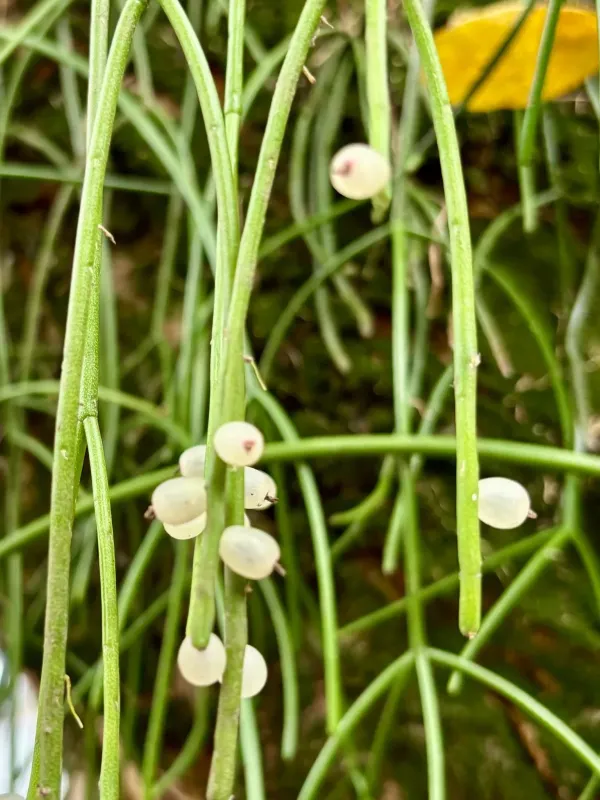
Description
Growing requirements
Rhipsalis baccifera, commonly known as the mistletoe cactus, is a unique species within the Cactaceae family. Unlike arid-land cacti, this plant is an epiphyte that grows on tree branches in tropical rainforests, making it a distinct agricultural and ornamental subject.
Its natural range is notably broad, spanning from the Americas to Africa and islands in the Indian Ocean. This global distribution is largely attributed to its adaptations to tropical climates, where it thrives in filtered light and high humidity.
Cultivation requires a growing medium that mimics the epiphytic habitat. A porous, peat-based soil mix with perlite or bark is essential to provide necessary aeration and prevent root rot, which is the most significant physiological risk for this crop.
The ideal climate involves temperatures between 18 and 26 degrees Celsius. While it prefers warmth, it does not tolerate intense direct sunlight, which can cause chlorophyll degradation and scorching of the delicate, cylindrical stems.
Watering frequency should be determined by the moisture level of the substrate. It is crucial to maintain a consistent moisture level without allowing the root zone to become waterlogged, as Rhipsalis roots are sensitive to hypoxia.
Main diseases and pests
Common pests affecting Rhipsalis baccifera include mealybugs, scale insects, and spider mites. These pests thrive in dry indoor environments and can quickly infest the complex, branching stem structure of the plant.
Fungal pathogens, particularly those causing stem rot and root decay, are significant threats in commercial production. These are usually triggered by poor drainage, over-irrigation, or insufficient air circulation in the greenhouse environment.
Pest management relies on integrated pest management (IPM) strategies, including regular inspections and the use of insecticidal soaps or systemic pesticides when necessary. Biological control agents are also effective in controlled environments.
To prevent disease, sanitation practices such as disinfecting containers and using sterile potting media are vital. Avoiding overhead irrigation when the ambient temperature is low helps prevent the proliferation of leaf-spotting fungi.
Maintaining balanced nutrition is essential, as nitrogen-heavy fertilizers can result in soft, etiolated growth that is significantly more susceptible to mechanical damage and pest colonization throughout the production cycle.