
Mistletoe cactus
Rhipsalis baccifera (J. S. Muell.) Stearn subsp. baccifera
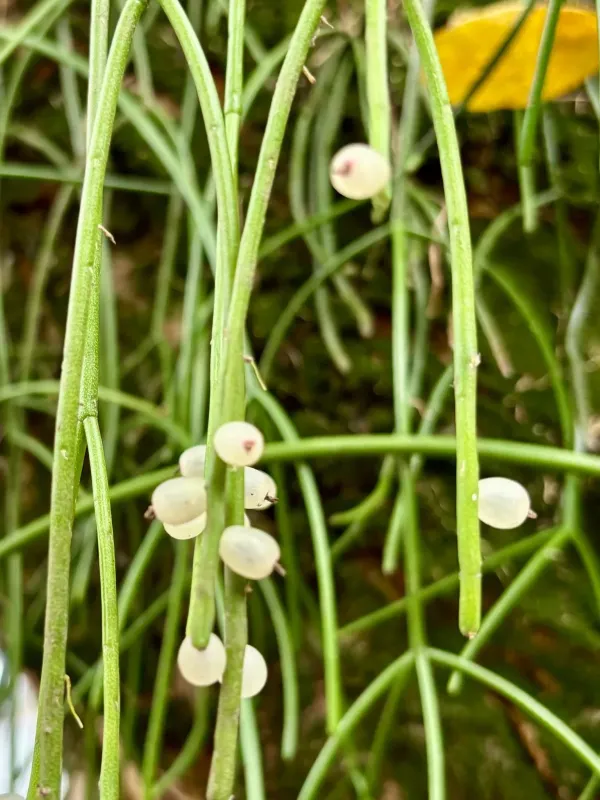
Description
Growing requirements
Rhipsalis baccifera, commonly known as the Mistletoe cactus, belongs to the family Cactaceae. It is a scientifically significant species as it is the only cactus genus with a native range extending beyond the Americas into Africa and parts of the Indian Ocean region.
As an epiphyte, this plant requires specialized cultivation conditions that mimic its natural habitat on tree bark. The growing medium must be highly porous, consisting of a mix of peat, pine bark, and perlite to allow for optimal root respiration and moisture drainage.
The culture thrives in bright, indirect light conditions. Exposure to direct intense sunlight can damage the epidermis of the cylindrical stems, leading to stunted growth. Maintaining a temperature range between 18C and 24C is essential for healthy vegetative development throughout the year.
Irrigation practices must be calibrated to ensure the substrate is never completely waterlogged. The Mistletoe cactus prefers high atmospheric humidity, which is best achieved through misting or using tray-based humidity systems, especially in climate-controlled environments.
Commercially, Rhipsalis baccifera is utilized as a popular ornamental plant. It is widely propagated for its cascading aesthetic appeal, making it a staple in the horticultural trade for hanging baskets and vertical green wall installations in professional interior landscaping.
Main diseases and pests
Common agricultural pests affecting this species include mealybugs, which tend to congregate in the junctions of the stems, and spider mites, which proliferate in environments with low humidity levels.
Root rot is the primary physiological threat caused by poor drainage or excessive watering. Effective management requires using sterile, well-draining potting substrates and ensuring adequate air circulation to prevent fungal growth.