
Rehmannia piasezkii and Rehmannia elata
Rehmannia piasezkii x Rehmannia elata
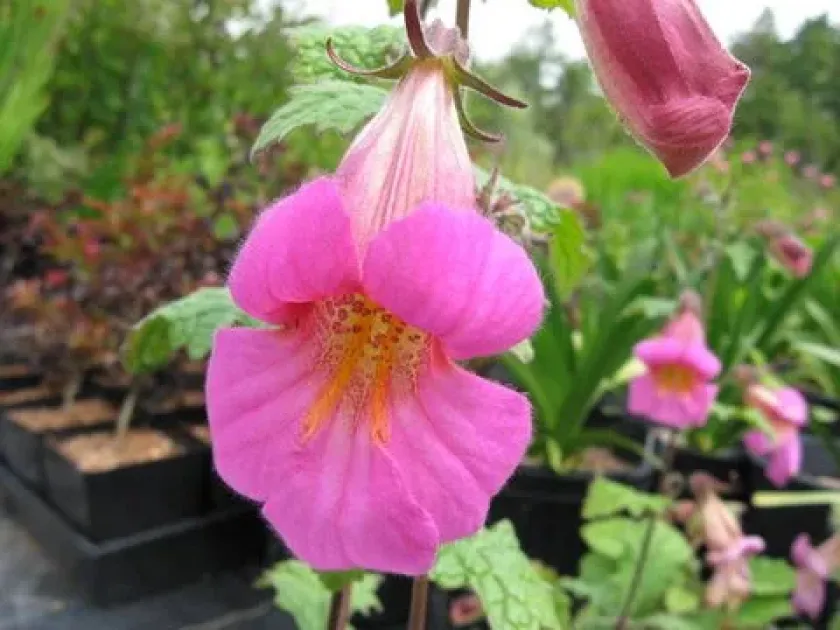
Description
Sowing dates
Sowing of Rehmannia seeds is typically carried out in late winter or early spring, usually during February or March, using greenhouse conditions.
The fine seeds of the culture require surface sowing into a light, moisture-retentive substrate, as they need exposure to light for germination.
The temperature regime for successful sprouting should be maintained within the range of +20...+22°C with stable humidity levels.
Pricking out the seedlings is performed after the development of two true leaves, transferring them into individual pots to strengthen the root system.
Transplanting into the open ground is conducted only after the risk of night frost has passed, usually at the end of May or early June.
Growing requirements
Rehmannia piasezkii and Rehmannia elata prefer sunny or semi-shaded locations protected from strong winds with fertile soil.
The plant is demanding regarding drainage; stagnant water in the root zone is fatal for the crop, making drainage layers essential in heavy soils.
An optimal substrate is considered to be loamy soil enriched with organic fertilizers, which ensures proper aeration and nutrient availability.
The culture is moderately thermophilic, thus requiring reliable protection or cultivation as a conservatory plant in regions with harsh winters.
Regular watering is critical during the peak flowering period, although it is important to prevent water from splashing onto the leaves to avoid fungal issues.
Main diseases and pests
The primary threat to Rehmannia is root rot, which arises due to excessive soil moisture and the lack of proper drainage systems.
In closed environments, the plant is frequently infested by spider mites, which spread rapidly under conditions of low air humidity.
Powdery mildew may manifest in mid-summer during periods of sharp fluctuations in daily temperatures combined with high atmospheric humidity.
Leaf spot diseases caused by fungal pathogens require preventive fungicide applications during the active growing season.
For pest management, it is essential to promptly remove damaged plant parts and apply biological control agents upon the first signs of infestation.