
Raphionacme procumbens
Raphionacme procumbens
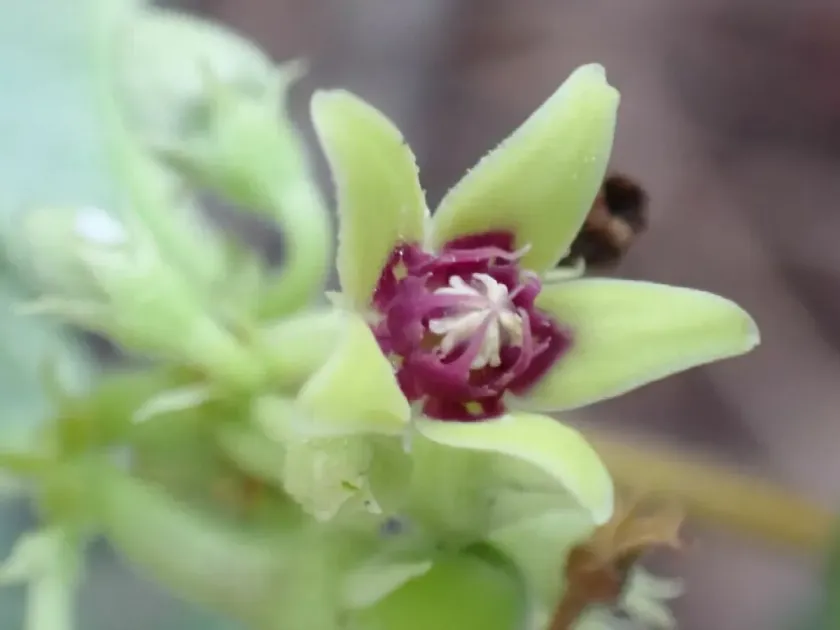
Description
Growing requirements
Raphionacme procumbens is a perennial species belonging to the Apocynaceae family, well-known for its prominent caudex. This swollen stem base serves as a crucial evolutionary adaptation, allowing the plant to store significant reserves of water.
The native habitat of this plant includes the tropical and subtropical regions of Africa. It typically grows in arid environments, such as savannas, where it survives intense dry spells by entering a state of semi-dormancy.
For cultivation purposes, the plant requires a spot with full sun exposure to maintain its compact, sturdy growth habit. In professional nursery settings, ensuring optimal light quality is essential for the healthy development of the caudex.
Soil requirements are strict: the medium must be highly porous and inorganic. A mixture consisting of coarse pumice, perlite, and a small amount of sandy loam is ideal to prevent moisture retention that causes root rot.
Environmental management involves a warm growing season followed by a cool, dry winter dormancy. During the active phase, standard greenhouse temperatures of +22°C to +28°C are considered ideal for steady development.
Main diseases and pests
The primary threats to Raphionacme procumbens are fungal infections and rot caused by overwatering. High humidity levels without adequate ventilation almost inevitably lead to the decay of the fleshy caudex.
Common succulent pests, including mealybugs and spider mites, can infest the plant, especially if it is kept in stagnant air conditions. Regular inspection and localized treatment are recommended for effective pest management.
Harvesting
Raphionacme procumbens is primarily categorized as a specialty ornamental plant. It holds significant value within the horticultural trade, particularly among enthusiasts of caudiciform and pachycaul plants.
There is no commercial harvesting cycle for this species, as it is grown primarily as a botanical specimen rather than a food or fiber crop. Production is concentrated in specialized nurseries that focus on rare succulents.
The plant is propagated through seed sowing, which requires careful moisture control. Germination usually occurs within a few weeks when temperatures are consistently above +25°C in a humid environment.
Harvesting for the market involves moving established specimens in specialized nursery pots. Due to the slow growth rate of the caudex, mature plants are considered highly desirable and reach premium prices.
Overall, Raphionacme procumbens represents a niche sector of the floriculture industry, appealing to collectors who value botanical rarity and the unique aesthetic of caudex-forming flora.