
Raphionacme flanaganii
Raphionacme flanaganii
Description
Growing requirements
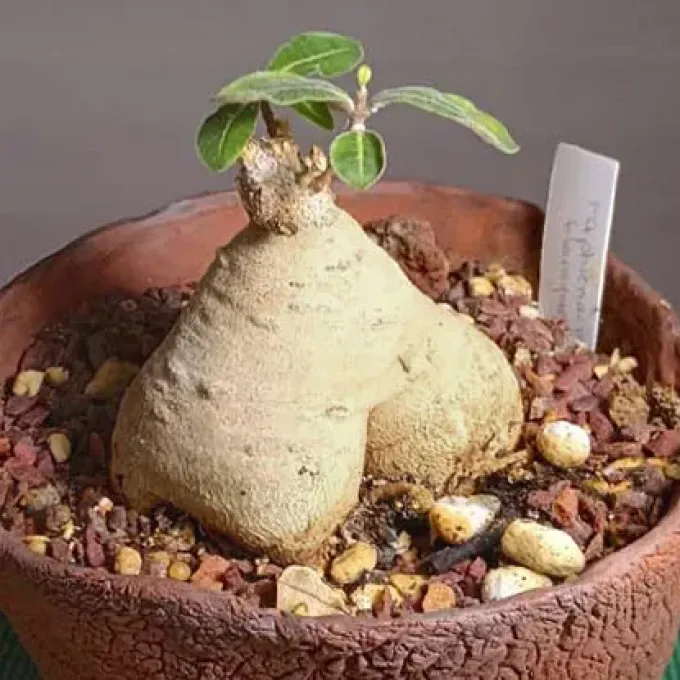
Raphionacme flanaganii is a distinct caudiciform plant belonging to the Apocynaceae family. Native to the arid landscapes of South Africa, it has evolved to store water within its massive underground tuber, known as the caudex.
To cultivate this species successfully, growers must provide a highly porous substrate. A mix of pumice, coarse sand, and a small percentage of organic material ensures proper drainage and prevents moisture accumulation around the roots.
The plant thrives in bright, filtered light. While it tolerates morning sun, intense midday exposure should be avoided to prevent scorching the delicate foliage that emerges from the caudex.
During the growing season, consistent warm temperatures between 22 and 28 degrees Celsius are required. Ventilation is critical to mimic the breezy, dry conditions of its natural habitat and prevent fungal growth.
As a seasonal plant, it requires a dormant period during the winter months. During this time, all watering must cease, and the plant should be kept in a cool, dry place until spring regrowth begins.
Main diseases and pests
The most significant threat to Raphionacme flanaganii is overwatering, which rapidly leads to root and caudex rot, often proving fatal to the specimen.
Mealybugs represent the primary insect pest, often hiding in the crevices of the stem base and feeding on the plant's sap, which weakens the overall structure.
Spider mites can infest the foliage under conditions of extremely low humidity, manifesting as fine webbing and yellowing of the leaves.
Fungal pathogens are a constant risk in humid, stagnant environments, necessitating the use of sterile tools and proper airflow management.
Preventative care involves using systemic insecticides and keeping the growing area clean to prevent the establishment of pest colonies.