
Raphia vinifera
Raphia vinifera
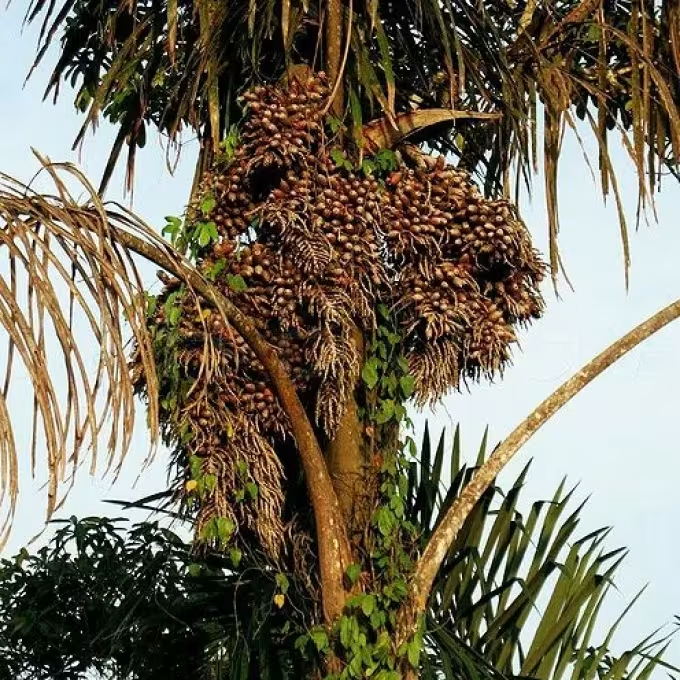
Description
Growing requirements
Raphia vinifera belongs to the Arecaceae family and is a prominent palm species native to the tropical regions of Africa. This plant thrives in high-moisture environments, typically inhabiting swampy areas, riverbanks, and floodplains where water availability is constant throughout the year.
The culture requires a strictly tropical climate with warm temperatures and minimal seasonal variation. It is highly sensitive to frost and prolonged drought periods, which restricts its cultivation area to regions with high precipitation and humid atmospheric conditions.
The soil requirements for Raphia vinifera involve deep, nutrient-rich substrates that possess high water-retention capacity. The plant is particularly well-adapted to silty and alluvial soils found in riverine ecosystems, which provide the necessary minerals for its rapid growth.
Botanically, this palm is distinguished by its massive stature and large, pinnate leaves that can exceed ten meters in length. The life cycle culminates in the production of large inflorescences, following which the plant exhausts its stored resources and eventually dies.
Agricultural management of this species focuses on maintaining natural stands and ensuring sustainable harvesting intervals. Due to its competitive growth in its native habitat, it requires relatively little intensive maintenance beyond monitoring for sustainable growth rates.
Yield
The primary economic value of Raphia vinifera lies in the production of raffia fiber, derived from the young, unopened leaflets. This natural fiber is globally recognized for its durability, flexibility, and resistance to environmental moisture, making it ideal for various industrial and garden uses.
Raphia vinifera is also highly valued for the production of palm wine, which is extracted by tapping the sap from the plant's terminal bud before the flowering stage. This beverage is a staple of local economies and is processed through traditional fermentation techniques.
The wood and leaf petioles provide essential construction materials for local architecture. These components are lightweight yet structurally rigid, frequently used in crafting furniture, fencing, and the framework of traditional housing.
The production cycle allows for a continuous harvest of leaves if proper pruning techniques are employed. Selective harvesting ensures that the plant retains its structural integrity and remains capable of periodic growth cycles over several years.
Efficiency in harvesting is determined by the timing of leaf collection and the subsequent processing steps. Proper sun-drying and treatment of the fibers enhance their quality and commercial value, meeting the demands of the international market for natural materials.
Main diseases and pests
Pest infestation poses a significant threat to Raphia vinifera stands, particularly from weevils that bore into the leaf petioles and trunks. Such damage can lead to severe structural weakening and significantly reduce the lifespan of the palm.
Fungal pathogens thrive in the humid conditions of the palm's natural range and can cause significant leaf spot diseases or root rot. If left unmanaged, these infections can spread quickly throughout dense stands, causing extensive mortality.
Environmental stress, such as intense wind events, may cause physical damage to the large, expansive fronds. Additionally, while the plant requires water, extreme flooding beyond normal levels can disrupt root respiration and compromise the plant's health.
Human impact, specifically over-harvesting, remains a major concern for the long-term viability of the species. Without adherence to sustainable harvesting quotas, natural populations can face rapid depletion, hindering the long-term productivity of the rove.
Effective mitigation strategies include the periodic removal of affected plant parts to reduce fungal spread and the monitoring of insect activity. Maintaining ecological balance within the palm groves is crucial for preventing widespread outbreaks of disease and pests.