
Raphia australis
Raphia australis
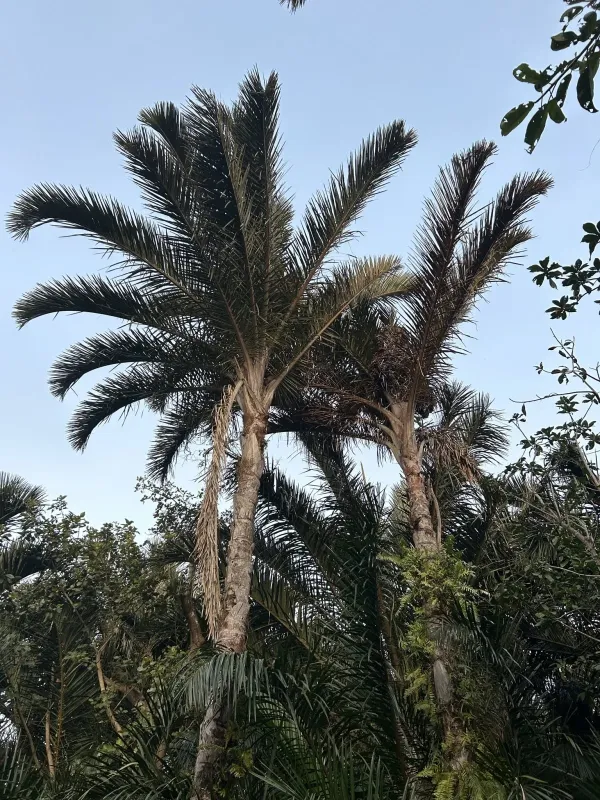
Description
Growing requirements
Raphia australis, commonly known as the South African Raffia palm, is a significant member of the Arecaceae family. It is native to the coastal regions of Southern Africa, typically found in swampy habitats and riparian corridors where water is abundant.
This palm species thrives in humid, tropical environments that are entirely frost-free. It requires constant high levels of atmospheric humidity and consistent soil moisture to maintain its vigorous growth rate and leaf development.
Regarding soil requirements, the plant prefers deep, nutrient-rich soils with a high water-holding capacity. It is highly intolerant of drought and soil desiccation, which is why it thrives best in protected wetland ecosystems.
Botanically, it is characterized by its enormous, pinnate leaves, which are among the largest in the plant kingdom. The stem is relatively short compared to the massive foliage canopy it supports during its life cycle.
In terms of management, successful cultivation relies on mimicking its natural riparian environment. Ensuring proper drainage is less critical than ensuring permanent access to water, which prevents physiological stress.
Harvesting
The primary economic output of Raphia australis is the strong, flexible fiber obtained from the epidermis of its leaf segments. This fiber is globally recognized for its durability and versatility in various agricultural and craft applications.
Harvesting involves carefully selecting mature but still pliable leaves. Skilled workers strip the undersides of the leaflets to extract the raw fiber, which is then dried in the sun to achieve the desired strength and texture.
Applications for the fiber include the production of durable ropes, woven baskets, mats, and horticultural ties. Because the fiber is biodegradable and renewable, it is increasingly popular in sustainable agricultural packaging.
The quality of the final product depends heavily on the post-harvest processing methods. If dried too quickly under direct intense heat, the fibers may lose their elasticity and become prone to snapping.
For the local communities, Raphia australis is an essential resource that provides raw materials for both artisanal crafts and large-scale industrial textile needs, making it a sustainable pillar of the regional economy.