
Regal raffia
Raphia regalis
Description
Growing requirements
Regal raffia (Raphia regalis) is a magnificent species belonging to the Arecaceae family, native to the tropical wetlands of Western and Central Africa, where it thrives in humid environments.
This crop requires a specific tropical climate with consistently high temperatures and abundant rainfall or groundwater access, as it is naturally adapted to swampy and lowland forest ecosystems.
The soil requirements involve deep, nutrient-rich, and moisture-retentive substrates that can support the rapid growth of massive leaf structures while preventing long-term anaerobic root stress.
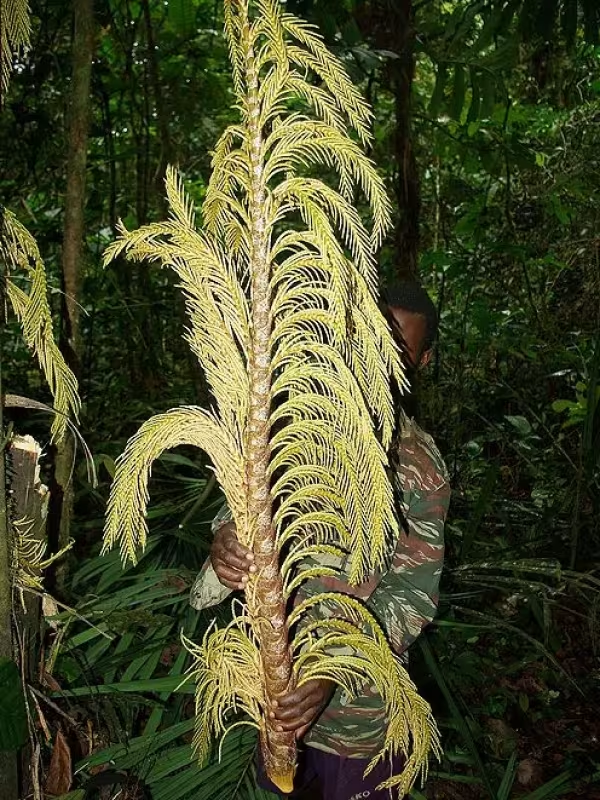
Botanically, it is defined by having some of the longest pinnate leaves in the plant kingdom, often exceeding 20 meters in length, which grow from a relatively short or partially subterranean stem.
Agricultural management for this species is highly specialized, focusing on plantation sites where frost is non-existent and humidity remains elevated throughout the entire vegetative period.
Yield
The primary economic value of Raphia regalis lies in the production of high-quality raffia fiber, which is harvested from the epidermis of the young, unopened leaf fronds.
This fiber is globally recognized for its remarkable strength, flexibility, and resistance to water, making it a sustainable and preferred material for artisanal crafts and gardening applications.
Yields are dependent on the selective harvesting of leaf material, ensuring that the palm's central apical meristem is never damaged, thus allowing for continuous leaf regeneration.
In addition to fiber production, these palms contribute to the restoration of wetlands and serve as a habitat for diverse wildlife species in their natural range.
The overall output is highly dependent on plantation density and the mastery of manual harvesting techniques, which determine both the quantity and the physical quality of the fibers obtained.
Main diseases and pests
The crop faces significant threats from specific tropical weevils and coleopteran larvae that burrow into the central stalk and damage the tender, developing leaf tissue.
Fungal pathogens represent a constant challenge in high-humidity cultivation, causing leaf spots and necrotic lesions that diminish the commercial utility of the harvested fibers.
Integrated pest management strategies are essential, focusing on early detection and the removal of infected plant parts to prevent widespread disease outbreaks within the plantation.
Weed competition, particularly from fast-growing vines and invasive shrub species, can stifle the young palms, requiring persistent manual labor to clear surrounding vegetation.
Rodent activity targeting the root systems or the base of the trunk can also lead to systemic weakness, making the palms more susceptible to environmental stress and secondary infections.
Harvesting
Harvesting involves the precise manual cutting of young fronds before they fully unfurl, as this stage provides the most pliable and high-strength fibers for commercial processing.
Once harvested, the leaf epidermis is carefully stripped, cleaned, and dried in shaded areas to maintain the natural moisture balance and prevent the fibers from becoming brittle.
The cultivation cycle is long-term, requiring patience as the plants reach sufficient maturity to provide sustainable annual harvests without compromising the plant's structural integrity.
Post-harvest logistics are complicated by the sheer size of the leaves, necessitating local processing facilities to reduce transport costs and preserve the freshness of the raw material.
Proper drying is the most critical stage of the harvest process, as inconsistent moisture levels during this time can result in mold growth or uneven physical properties of the finished fiber.