
Sudan raffia palm
Raphia sudanica
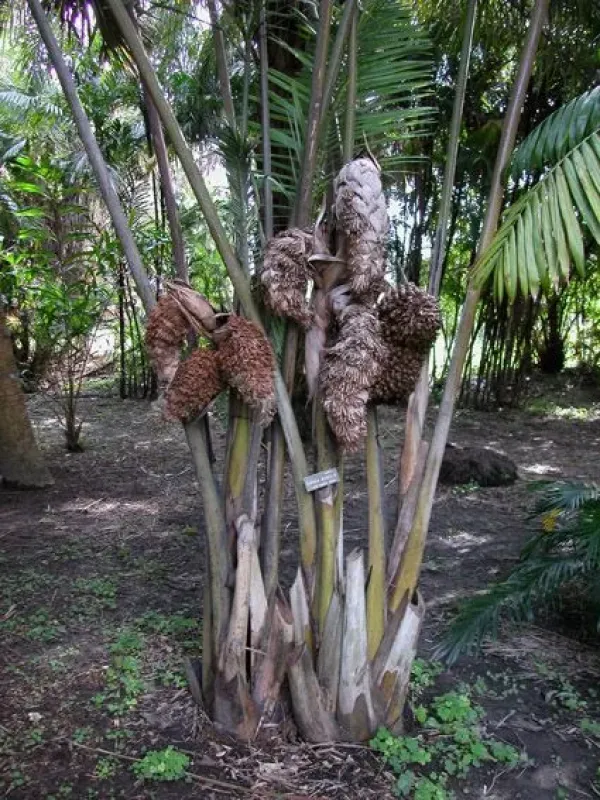
Description
Growing requirements
The Sudan raffia palm (Raphia sudanica) is a significant species belonging to the Arecaceae family, primarily native to the tropical wetlands of Africa.
This species thrives in areas with consistent high humidity and warm temperatures, making it a specialized crop for tropical marshlands and riverine ecosystems.
The plant requires deep, nutrient-rich soils that maintain high moisture levels throughout the year to support its robust growth and large foliage structure.
Botanically, the plant is characterized by its massive, pinnate leaves, which are the main source of the durable and flexible fibers used in various industrial and artisanal sectors.
Agricultural management of this crop focuses on protecting the young leaves from damage and ensuring the plant has enough space to expand its extensive root system in the wetland soil.
Harvesting
The primary economic output of Raphia sudanica is the high-quality fiber obtained from the undersides of its young, unopened leaf segments.
Harvesting involves the manual removal of leaf epidermal strips, a delicate process that requires skill to ensure the fiber quality remains high without damaging the plant's growth point.
Once harvested, the strips are typically sun-dried, causing them to turn into the familiar, strong, and flexible raffia material used globally for horticultural tying and weaving.
Sustainable harvesting techniques are critical to ensure that the palm remains productive over many years, as over-harvesting can weaken the plant's overall vitality.
The fiber is widely valued for its biodegradability, tensile strength, and versatility, making it a staple product in both traditional crafts and modern sustainable agriculture.