
Chinese radish
Raphanus sativus L. convar. lobo Sazon. et Stankev. var. lobo
Description
Sowing dates
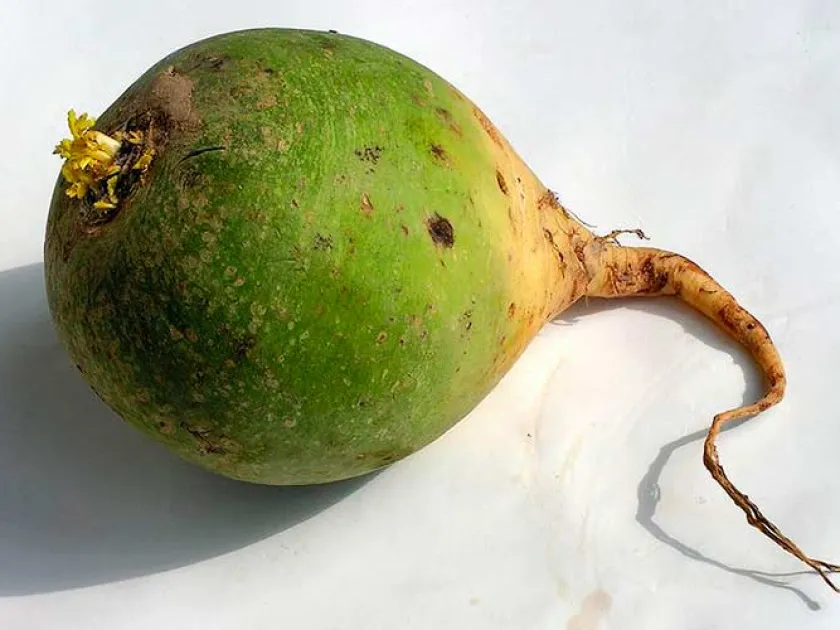
Lobo radish is an annual or biennial vegetable crop belonging to the Brassicaceae family. In temperate climates, sowing is typically performed in the second half of summer, usually in July or early August. This timing is critical because the crop is sensitive to day length, and early spring planting often triggers premature bolting rather than root formation.
To produce high-quality marketable roots, seeds are sown in rows with spacing of about 40–50 cm. Thinning is essential to maintain a distance of 15–20 cm between individual plants, ensuring sufficient space for growth. Seeds should be planted at a depth of 2–3 cm depending on soil texture.
The optimal planting time for a fall harvest depends on the region, but it is important to consider the growing season of the specific cultivar, which usually ranges from 60 to 90 days. Late sowing yields juicy roots that exhibit better storage potential during winter in cool conditions.
Ensuring good soil-to-seed contact is vital during sowing. In dry conditions, light irrigation before emergence is recommended to prevent the surface layer from drying out, which is crucial for uniform germination.
Crop rotation is mandatory for successful cultivation. Lobo radish should not be planted after other brassica crops like cabbage, regular radish, or mustard, as this leads to the buildup of specific soil-borne pathogens and pests.
Growing requirements
This crop has moderate temperature requirements. Lobo thrives in cool weather between +15...+20 degrees Celsius, making it ideal for the autumn growing season. In extreme heat, root development slows down, and the flavor can become excessively pungent or woody.
The plant prefers loose, fertile loamy or sandy soils with a neutral to slightly acidic pH. On heavy clay soils, roots often become deformed and misshapen, losing their market value; therefore, deep soil preparation before planting is necessary.
Lobo is a moisture-loving plant that requires regular irrigation throughout the active growth period. Soil moisture deficits lead to slow root filling, and sudden fluctuations in water availability can cause the skin to crack, significantly negatively impacting storability.
Light levels play a key role in the physiology of the crop. Although it is a long-day plant, excess direct sunlight during high temperatures is undesirable. Well-lit areas are ideal, but in southern regions, light shading during the hottest hours may be beneficial.
Applying organic matter like compost or humus is best done during the preparation for the previous crop. Applying fresh manure directly before planting lobo is strongly discouraged, as it promotes excessive foliage growth at the expense of root development and attracts soil pests.
Yield
The average yield of lobo radish with proper agricultural practices ranges from 3 to 5 kilograms per square meter. This figure can vary significantly based on the chosen cultivar, plant density, and the level of soil fertility.
The weight of a marketable root depends on varietal characteristics and typically ranges from 300 grams to over 1 kilogram. Modern hybrid varieties offer greater stability in root weight and shape, which is particularly important for commercial vegetable production.
To increase marketable output, growers often employ intensive care methods, including timely thinning and loosening of rows. Removing weeds during the early stages of development allows plants to utilize soil resources more efficiently for vegetative and root mass accumulation.
Strategic use of mineral fertilizers, especially those with high potassium and phosphorus content during the root formation phase, promotes better filling and sugar accumulation. However, growers should avoid excessive nitrogen, which leads to nitrate accumulation in the flesh.
Final yield also depends on field protection. Early pest control and the prevention of fungal diseases minimize losses, ensuring a higher quantity of high-quality roots suitable for long-term storage.
Main diseases and pests
Cruciferous flea beetles are the most dangerous pests for lobo radish during the early developmental stages. These small jumping beetles can destroy young seedlings in a short time by eating holes in cotyledon leaves, often leading to total crop failure in hot, dry weather.
Cabbage root flies cause severe damage to the root system. The larvae of this insect burrow into the root, making the vegetable unsuitable for storage or consumption. Protection requires both agricultural methods and the use of modern insecticides.
Clubroot is a dangerous fungal disease causing galls and swellings on the roots. The pathogen can survive in the soil for many years, so if affected plants are discovered, brassica crops should be avoided in that specific location for 5–7 years.
Powdery mildew can attack the foliage under conditions of high humidity and poor air circulation. The disease appears as a white powdery coating on leaves, leading to premature foliage death and weakening the plant, which negatively impacts root size.
An integrated approach is most effective for pest and disease management: using clean seed stock, strictly following crop rotation, removing weeds early, and utilizing biological control agents to ensure a safe, high-quality product.
Harvesting
Harvesting lobo radish should be completed before the onset of sustained frosts, usually in October. While the crop can withstand short drops in temperature down to -2 degrees Celsius, freezing the root is highly undesirable as it drastically reduces storability in winter storage.
Harvesting is best performed during dry, sunny weather. Careful removal from the soil prevents mechanical damage to the skin, through which rot-causing pathogens can easily enter and spread during storage.
After removal, it is recommended to trim the foliage immediately, leaving short petioles about 1–2 cm long. It is crucial not to damage the crown of the root to avoid premature sprouting or dehydration during cellar storage.
Before moving the crop to long-term storage, it should be dried in the shade for a few hours. This cleans the surface of excess soil and allows minor surface abrasions to heal, preventing infection.
Lobo radish is best stored in cool rooms at temperatures of 0...+2 degrees Celsius with high relative humidity (around 85–90%). Under these conditions, the roots retain their nutritional value and juiciness for several months, ensuring food availability throughout the winter.