
Black radish
Raphanus sativus L. var. niger (Mill.) S. Kerner
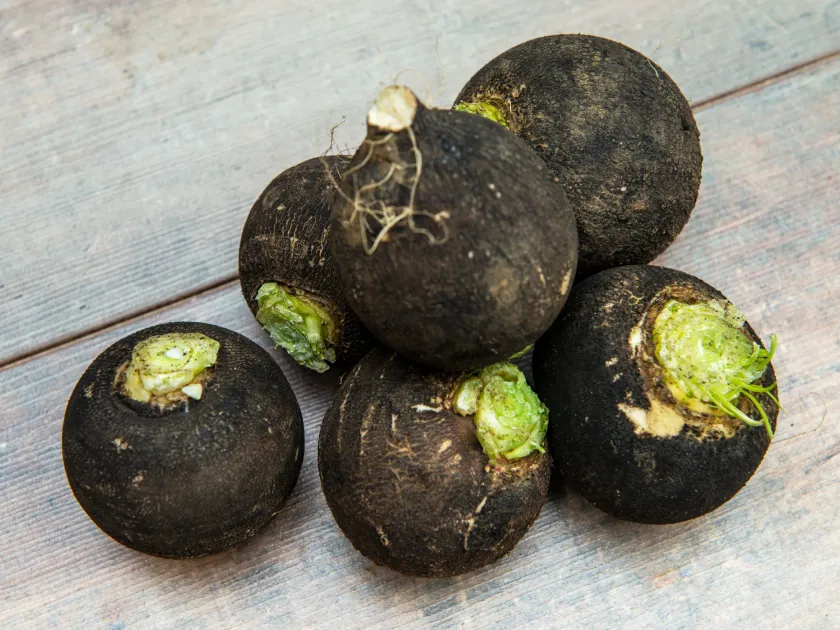
Description
Sowing dates
Black radish is typically grown as a late-season crop, with sowing usually taking place in mid-to-late summer to ensure proper root development.
Planting from July to mid-August helps the plants avoid the long days of early summer, which often trigger premature bolting and poor quality roots.
Seeds should be sown in rows spaced 30–40 cm apart, with a planting depth of approximately 2–3 cm depending on the soil texture and moisture level.
Maintaining consistent soil moisture during the germination phase is critical for achieving uniform seedling emergence across the entire planting area.
Thinning is necessary once the seedlings develop their first true leaves, ensuring that each plant has enough space, roughly 15 cm apart, to mature properly.
Growing requirements
Belonging to the Brassicaceae family, black radish thrives in fertile, well-drained loamy or sandy soils with a near-neutral pH balance for optimal nutrient uptake.
This crop requires a steady water supply to prevent the roots from becoming woody or overly pungent, especially during the dry heat of mid-summer.
Crop rotation is essential; planting radish after potatoes or tomatoes helps prevent the buildup of soil-borne pathogens common to cruciferous vegetables.
Although organic matter is beneficial, applying fresh manure should be avoided as it can cause deformed roots and increase the risk of disease.
Regular cultivation of the soil surface between rows helps improve aeration and moisture retention, which are vital for vigorous plant growth.
Yield
Yield potential of black radish is highly dependent on specific variety selection, soil fertility, and the overall management of the crop during its growth cycle.
Under optimal commercial growing conditions, yields can range from 30 to 50 tonnes per hectare, depending on local climate and field conditions.
Strategic application of potassium-based fertilizers during the mid-growth phase supports root thickening and enhances the final marketable quality of the crop.
Proper density management is a key factor in ensuring a high percentage of uniform, standard-sized roots that meet consumer quality expectations.
Consistent monitoring for environmental stress allows farmers to adjust irrigation schedules, thereby stabilizing production throughout the season.
Main diseases and pests
Cruciferous flea beetles are the most significant early-stage threat to black radish, often causing severe damage to young cotyledons if not managed promptly.
Cabbage root fly larvae pose a serious risk as they burrow into the developing roots, creating tunnels that make the produce unmarketable and susceptible to rot.
Clubroot is a widespread fungal disease that causes root malformation and can persist in the soil for years, necessitating strict hygiene and rotation protocols.
Bacterial soft rot can occur if soil moisture levels are too high or if the roots suffer mechanical damage during the growth process or cultivation.
- Use fine mesh netting to protect seedlings from adult insects.
- Practice rigorous weed control to remove host plants for pests.
- Ensure good drainage to prevent the development of root-rotting fungi.
Harvesting
Harvesting should be completed in late autumn before the ground freezes, as the crop can tolerate light frosts but not sustained deep freezing temperatures.
Roots should be lifted carefully from the soil, minimizing cuts and bruises, as any physical damage significantly reduces the shelf life of the harvested radish.
The tops should be trimmed close to the crown of the root, taking care not to damage the growth point to ensure the root remains dormant in storage.
After harvest, it is recommended to cure the roots in a cool, shaded area for a short period to allow the skin to harden and heal any minor scuffs.
Proper storage is best achieved in root cellars or refrigerated storage units with high humidity and temperatures maintained near the freezing point of water.