
Prostanthera ovalifolia
Prostanthera ovalifolia
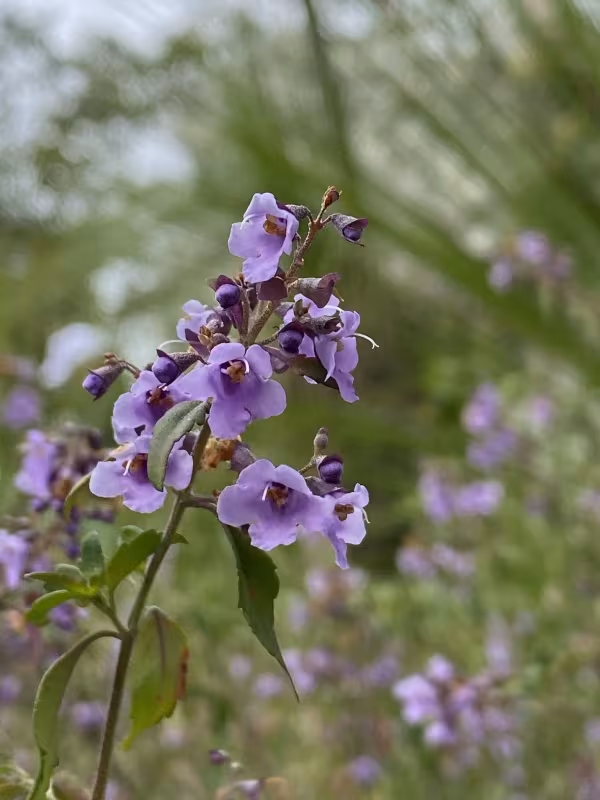
Description
Sowing dates
Prostanthera ovalifolia, commonly known as the oval-leaf mint bush, belongs to the Lamiaceae family. It is typically propagated through stem cuttings rather than seeds to ensure genetic uniformity.
Cuttings should be taken from non-flowering, healthy shoots during the late spring. The use of rooting hormone significantly improves the success rate of propagation.
Planting in the field is recommended once all risks of frost have passed. The soil should be prepared in advance, incorporating organic matter to improve structure.
Young plants require consistent moisture during the establishment phase, which typically lasts for the first few months after transplanting into open ground.
Proper spacing is crucial for air circulation. Planting at intervals of 1 to 1.5 meters helps prevent the development of fungal pathogens common in dense foliage.
Growing requirements
This species thrives in sunny, well-drained environments. It is highly sensitive to waterlogged conditions, which can lead to rapid root decay and plant failure.
Soil pH should range from slightly acidic to neutral. High levels of calcium or alkaline soils may result in nutrient deficiencies and yellowing of the foliage.
While the plant is native to Australia, it appreciates a sheltered location protected from harsh, drying winds that can cause leaf scorch.
Regular but controlled irrigation is required. The soil surface should be allowed to dry slightly between waterings to encourage deep root system development.
In regions with cold winters, the plant should be grown in containers that can be moved indoors, as the species is not hardy against hard freezes.
Yield
The economic value of Prostanthera ovalifolia lies in its foliage, which is rich in essential oils featuring a distinct minty, eucalyptus-like aroma.
Regular pruning and harvesting of the canopy stimulate the plant to produce more vegetative shoots, effectively increasing the biomass yield per plant.
Nitrogen-based fertilization applied during the growth period significantly enhances leaf production, which is the primary source of the valuable essential oils.
The extraction of essential oil via steam distillation requires fresh or semi-dried biomass harvested at the beginning of the blooming period.
Yield stability depends heavily on consistent management practices, including irrigation and timely harvest scheduling to avoid senescence of the leaves.
Main diseases and pests
Root rot, often caused by Phytophthora species, is the most significant threat to the health of the plant, especially in poorly drained soils.
Pests like spider mites and scale insects can become problematic, particularly in dry and hot conditions where plant resistance might be lowered.
Powdery mildew is a common fungal issue that arises when air circulation is poor. Thinning out the canopy helps significantly in disease prevention.
Insects like aphids can also affect tender young growth in the spring, requiring prompt monitoring and the application of suitable horticultural soaps or insecticides.
Implementing a strict hygiene protocol, such as removing fallen leaves and sanitizing tools, is essential to minimize the risk of spreading pathogens within the plantation.
Harvesting
Harvesting is performed by trimming the tips of the branches. This method serves both as a collection process and as a form of light pruning to maintain plant vigor.
It is vital to dry the foliage in a dark, well-ventilated area at temperatures below 35 degrees Celsius to preserve the integrity of the essential oils.
Harvesting should ideally occur in the early morning after the dew has evaporated, as this is when the concentration of essential oils is at its highest.
Storage must be in opaque, airtight containers to prevent degradation due to light exposure and oxidation of the delicate aromatic compounds.
Depending on the cultivation intensity and environmental conditions, up to three harvests can be achieved annually, supporting sustainable production cycles.