
Victorian Christmas Bush
Prostanthera lasianthos
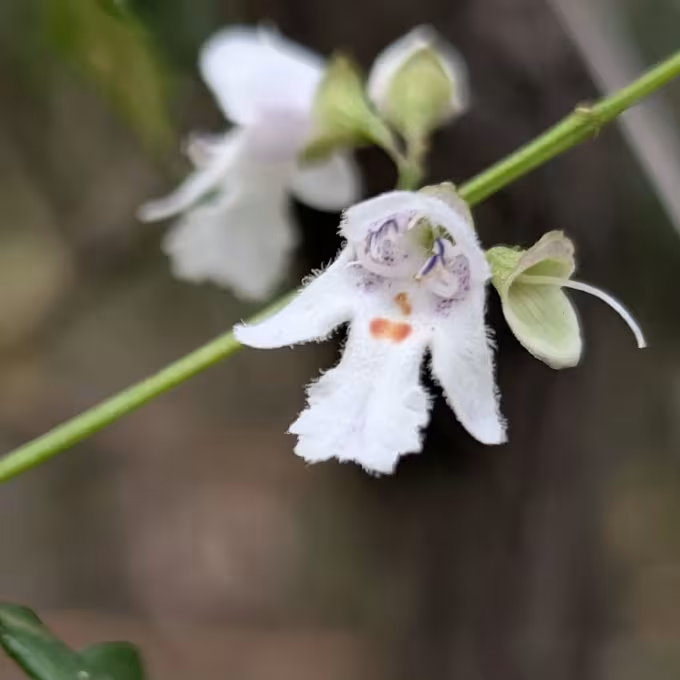
Description
Growing requirements
Prostanthera lasianthos, commonly known as the Victorian Christmas Bush, is a species belonging to the Lamiaceae family. It is a large, hardy shrub native to the temperate regions of eastern Australia.
The cultivation of this plant requires moist, well-draining soil that is rich in organic matter. While it is adaptable to various soil types, it performs best in sheltered locations protected from harsh, drying winds.
Regarding climatic needs, this shrub thrives in regions with cool to mild temperatures and consistent rainfall. It is not tolerant of prolonged drought or severe frosts, making it best suited for sheltered garden positions.
Botanically, it is distinguished by its deep green, aromatic leaves which emit a strong, pleasant minty scent when crushed. The flowers appear in terminal panicles, featuring delicate white or pale pink petals with purple throat markings.
Agrotechnical management involves regular pruning immediately after the flowering season to encourage bushier growth and prevent the shrub from becoming excessively woody and sparse.
Main diseases and pests
The plant is generally robust, but it can be susceptible to root rot if the soil is kept waterlogged. Good drainage is the primary defense against such fungal pathogens.
Leaf-eating insects and scale insects may occasionally infest the foliage, particularly in poorly ventilated greenhouse environments or overly crowded planting schemes.
Aphids can be a common nuisance during the flush of new spring growth; these can typically be controlled using mild insecticidal soaps or horticultural oils.
Proper airflow is critical for maintaining plant health and preventing outbreaks of powdery mildew, which can develop in high-humidity, low-ventilation conditions.
- Avoid overhead irrigation to keep foliage dry.
- Monitor for signs of pest damage during active growth phases.
- Ensure adequate spacing between individual plants to promote air circulation.
Harvesting
The Victorian Christmas Bush is primarily cultivated for its high ornamental value in parks and large private gardens, where it provides a significant seasonal display.
Its aromatic foliage has historical use in local botanical industries for the extraction of essential oils, valued for their unique fragrance profiles.
Harvesting for essential oil production involves collecting the fresh terminal growth, which contains the highest density of glandular trichomes responsible for scent.
The plant is also utilized in the floral industry as a filler foliage, as its woody stems provide stability in arrangements and its scent adds an extra sensory dimension.
Post-harvest handling must be rapid, with material kept in cool, dark environments to prevent the volatile organic compounds in the leaves from degrading before processing.