
Prosopis strombulifera
Prosopis strombulifera (Lam.) Benth.
Description
Growing requirements
Prosopis strombulifera is a resilient shrub belonging to the Fabaceae family, native to the arid and semi-arid regions of South America, particularly Argentina and Chile. It is renowned for its ability to thrive in extreme environments, including saline and desert soils.
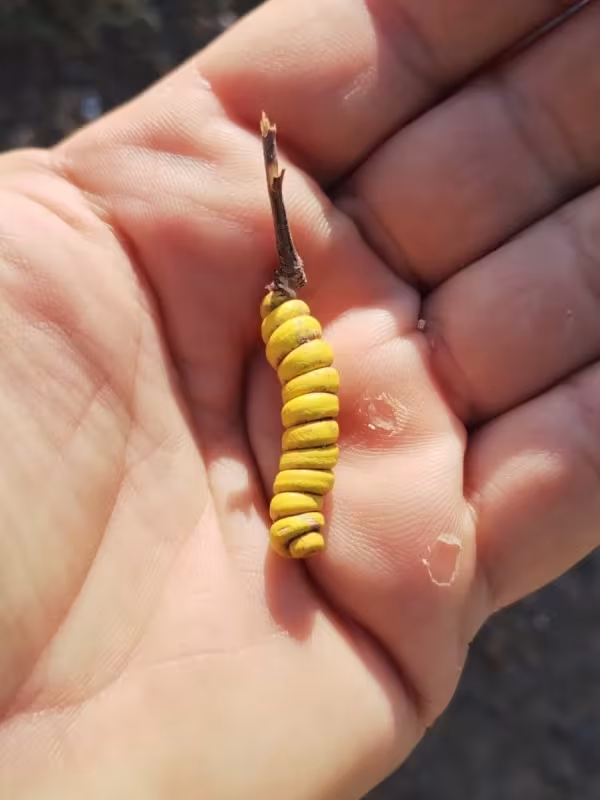
The plant is biologically characterized by its unique spirally twisted fruit pods, which distinguish it from other members of the Prosopis genus. It possesses deep-reaching root systems that allow it to tap into groundwater, providing stability in harsh, sandy, and salt-affected landscapes.
Regarding environmental requirements, this species demands high solar exposure and prefers well-aerated, coarse-textured soils. It is highly drought-tolerant and can withstand the significant temperature fluctuations typical of desert climates without supplemental irrigation.
In terms of agricultural and ecological management, it is primarily used for phytoremediation and soil stabilization. By planting it in degraded areas, land managers can effectively combat desertification and prevent the movement of sand dunes, which is crucial for ecological restoration.
Maintenance involves minimal intervention; in fact, the plant performs best when kept in conditions that mirror its natural habitat. It requires no specialized fertilizers or complex pruning, making it an economically viable choice for land rehabilitation projects in arid zones.
Main diseases and pests
Prosopis strombulifera is notably resistant to many common agricultural pathogens due to the tough, sclerophyllous nature of its tissues and its specialized metabolic adaptations.
Root rot remains the most significant threat if the soil drainage is inadequate. Poor aeration combined with moisture saturation can lead to fungal infections that jeopardize the plant's stability.
Seed-feeding insects, such as specific bruchid beetles, are known to target the spiraled pods, often consuming or damaging the seeds before they can germinate.
Herbivory can be a concern for young seedlings, although the presence of defensive spines makes adult shrubs generally unpalatable to most livestock and native herbivores.
Long-term environmental degradation, such as severe soil compaction or chemical pollution, can weaken the plant's immune system, making it more susceptible to opportunistic pathogens that would otherwise be harmless.