
Honey mesquite
Prosopis glandulosa Torr.
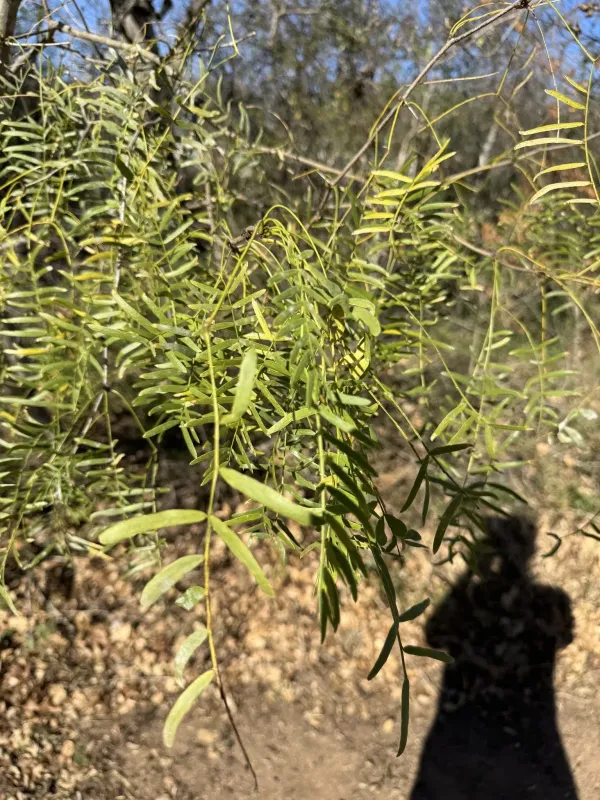
Description
Sowing dates
The propagation of Prosopis glandulosa, commonly known as honey mesquite, begins with the careful preparation of seeds. Due to the extremely hard seed coat, scarification is essential to ensure uniform germination, which can be done mechanically or through chemical treatment.
Seeds are typically sown in early spring once the soil temperature consistently reaches 20–25 degrees Celsius. In nursery settings, seeds should be planted at a depth of 2–3 centimeters in well-drained, sandy-textured media.
Initial growth is notably slow, requiring weed management during the seedling stage to prevent competition for nutrients and sunlight. Once established, the root system develops rapidly, often reaching significant depths within the first year.
Field transplanting is best performed after the last frost to ensure the young trees survive the establishment phase without temperature-related stress.
Providing ample spacing between plants is crucial for canopy development, as honey mesquite requires full exposure to sunlight for optimal physiological health and vigor.
Growing requirements
Honey mesquite is a member of the Fabaceae family, highly adapted to arid and semi-arid climates. Its primary adaptation is an incredibly deep taproot system that allows it to access groundwater in environments where rainfall is scarce.
The species requires full sun exposure and is intolerant of shade. It is highly versatile regarding soil types, performing best in well-drained sandy or loamy soils, though it shows notable tolerance to saline conditions.
Climate-wise, the plant thrives in hot, dry environments with long growing seasons. While mature specimens are quite hardy, they are sensitive to extreme cold during the seedling stage.
As a nitrogen-fixing species, honey mesquite improves soil fertility, making it an excellent candidate for restoration projects or agroforestry systems in degraded lands.
Proper drainage is the most critical environmental requirement, as waterlogged soils can lead to root pathogens and stunted development, despite the plant's overall resilience.
Yield
The primary yield of honey mesquite consists of protein- and sugar-rich pods, which serve as highly nutritious fodder for livestock. These pods are especially valuable during seasonal drought periods when forage options are limited.
The timber of Prosopis glandulosa is highly valued in the furniture industry and for specialized construction due to its extreme density, resistance to decay, and rich, durable color.
Honey production is another significant economic benefit. Honey mesquite flowers provide a nectar source for bees, resulting in a premium, high-quality honey that is sought after in gourmet markets.
In addition to these products, the plant provides shade for cattle, reducing heat stress on pasture-raised animals, which indirectly boosts livestock production yields.
When managed as a sustainable harvest system, honey mesquite allows for a multi-use strategy that maximizes land productivity in otherwise marginal or arid areas.
Main diseases and pests
Seed-feeding insects, particularly bruchid beetles, represent the most significant threat to the reproductive success of honey mesquite, as larvae can consume a large percentage of developing seeds within the pods.
Phytophthora root rot can occur if soil drainage is inadequate, leading to decay and tree decline. This emphasizes the need for site selection focused on permeable soil profiles.
In certain agricultural regions, honey mesquite can become an invasive woody weed, rapidly colonizing pastures if not effectively controlled through regular mechanical clearing or selective herbicides.
Rodents and other small mammals may strip the bark of young saplings, posing a threat to plantation survival; protective guards are often necessary during the first two to three years.
Overall, the species is remarkably resilient and rarely suffers from catastrophic disease outbreaks when planted within its natural geographic range under appropriate environmental conditions.