
Prosopis articulata
Prosopis articulata S. Watson
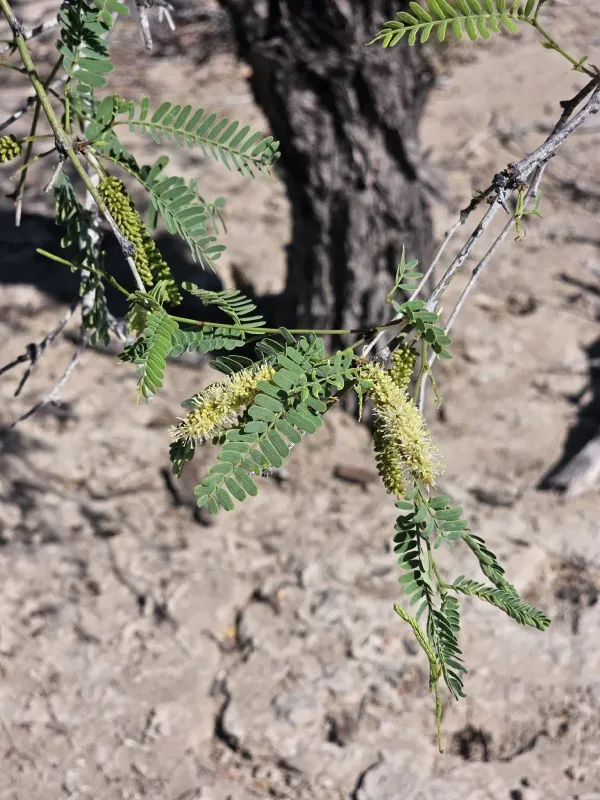
Description
Sowing dates
Seeds of Prosopis articulata possess a hard, impermeable seed coat, requiring scarification to ensure uniform germination. This process can be achieved mechanically or through chemical treatments to allow water absorption.
The optimal sowing time is during the spring when temperatures consistently reach 20–25 degrees Celsius. Sowing is typically performed in nursery containers to provide seedlings with a protected environment until they reach a robust size.
Transplanting into the field is carried out once the root system is well-established. Proper spacing of at least 5 meters between individual trees is essential to accommodate the large canopy and extensive root development characteristic of the species.
Initial irrigation is crucial post-transplanting to ensure establishment. Once the tree has adapted to its site, it exhibits extreme drought tolerance, reducing the need for active irrigation in mature specimens.
As a member of the Fabaceae family, this species possesses nitrogen-fixing capabilities. Including it in planting schemes helps enrich soil fertility, serving as a biological support for companion crops in agroforestry systems.
Growing requirements
Full sun exposure is a non-negotiable requirement for Prosopis articulata. It thrives in high-light environments and demonstrates poor vigor and irregular growth habits when subjected to shading from other trees or structures.
The plant is highly versatile regarding soil types, performing well in sandy, rocky, or alkaline conditions. However, the best results in terms of growth rates are achieved in deep, well-draining soils with adequate depth for root expansion.
Climate adaptability is a hallmark of this species, as it is evolved to withstand intense heat and prolonged periods of drought. It is an ideal candidate for reforestation projects in arid or desert-like environments where other vegetation fails.
The species is frost-sensitive and thrives best in tropical or subtropical zones. It requires careful placement in areas prone to sudden temperature drops to prevent damage to younger, less hardy vegetative parts.
Minimal management is required for established trees. Maintenance primarily involves ensuring the site is free from waterlogging, as the species is highly susceptible to root damage in anaerobic or overly damp soil conditions.
Yield
The primary economic output of Prosopis articulata is its pods, which are highly nutritious for livestock due to their protein and sugar content. These pods are valuable as a supplementary fodder source during seasonal droughts.
Its timber is highly valued for its durability, hardness, and resistance to decay. It is frequently utilized in high-end carpentry, furniture manufacturing, and for the production of dense, long-burning charcoal.
The species serves as an excellent honey plant. During periods when other forage is scarce, the flowers provide an essential nectar source for bees, resulting in high-quality honey with a distinctive flavor profile.
Yields are typically substantial for mature trees, providing annual harvest of pods. The tree remains productive for many years, offering a sustainable and reliable source of biomass for diverse agricultural purposes.
Beyond material products, the tree provides ecosystem services by acting as a windbreak and soil stabilizer. Its ability to thrive on degraded land makes it a vital component in reversing desertification and erosion.
Main diseases and pests
Insect pests, particularly various bruchid beetles, pose a risk to the seeds and pods. These infestations can significantly reduce the viability of seed stocks and diminish the nutritional quality of the forage pods.
Root-knot nematodes can become a problem in poorly drained soils. Over-irrigation is the primary catalyst for these issues, and managing water intake is essential to maintaining the overall health of the root zone.
Fungal infections can occur in branches or stems if the bark is damaged. Proper pruning practices are necessary to ensure quick healing and to prevent pathogens from entering the tree through open wounds or cracks.
Leaf-feeding insects may be observed during the primary growing season, though they rarely threaten the survival of mature, established trees. Biological control agents are often sufficient to manage these minor outbreaks.
Consistent monitoring for early signs of stress, such as yellowing leaves or wilting, is advised. Prompt identification of pests or disease allows for timely intervention, ensuring the long-term productivity of the plantation.