
Prosopis cineraria
Prosopis cineraria (L.) Druce
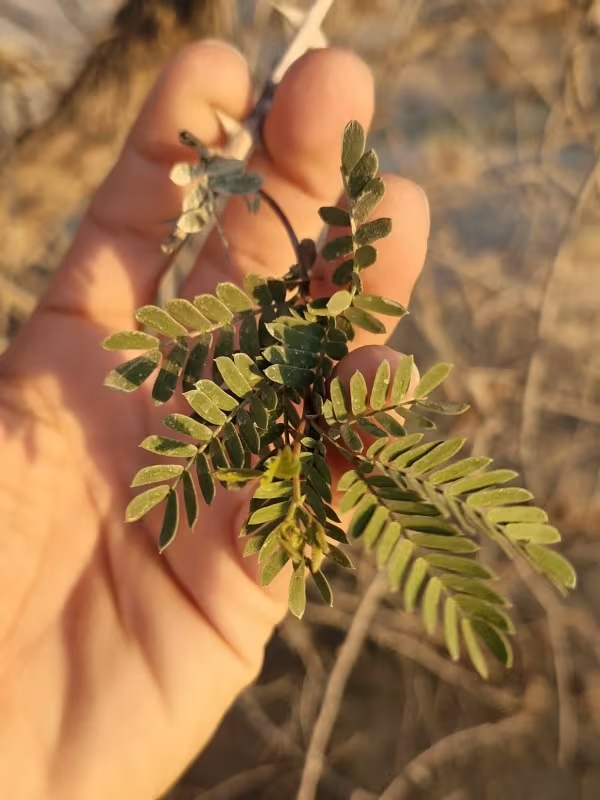
Description
Sowing dates
Sowing of Prosopis cineraria seeds is typically performed after scarifying the seed coat to improve germination rates. The optimal time for sowing is at the beginning of the rainy season, as the soil moisture provides the necessary conditions for successful root establishment.
In nursery conditions, seeds are planted in containers filled with a balanced mixture of sand and organic matter. Young seedlings require consistent watering during their early stages until the taproot develops sufficiently to access deep groundwater, ensuring the plant's survival in harsh climates.
Direct seeding in permanent locations is common in regions with predictable rainfall. A spacing of at least 5 to 8 meters between rows is recommended, as mature trees develop expansive crowns and require ample space to thrive without competing for resources.
When transplanting saplings, extreme care must be taken to avoid damaging the taproot, which begins growing rapidly immediately after germination. Protecting young plants from livestock and wild herbivores is essential, as they are highly vulnerable to browsing during the first three years.
Agricultural management should focus on weed control during the establishment phase, as young trees struggle to compete for water and nutrients. Supplementing the soil with phosphate fertilizers during planting helps accelerate root development, enhancing the plant's adaptability to dry conditions.
Growing requirements
Prosopis cineraria is a true xerophyte belonging to the Fabaceae family, renowned for its ability to survive extreme temperatures exceeding +45 degrees Celsius. It is perfectly adapted to arid environments where other species fail to thrive.
The tree prefers well-drained sandy or loamy soils but exhibits high tolerance to salinity. By forming a symbiotic relationship with nitrogen-fixing bacteria, it significantly contributes to soil fertility, making it an ideal candidate for restoring degraded lands in arid regions.
Light requirements are high, as the plant demands full sun to reach its full development potential; shade inhibits its growth. It is highly resistant to dramatic daily temperature fluctuations, making it a critical component for greening deserts and semi-arid landscapes.
Water requirements are significant only during the first two years of growth until the deep taproot system is established. Once mature, the tree becomes largely independent of surface water, drawing moisture from depths of up to 30 meters.
High resistance to strong winds is provided by its deep-reaching root system, allowing the tree to serve as an effective windbreak. It thrives in regions with annual precipitation ranging from as low as 75 mm to 800 mm, demonstrating remarkable climatic flexibility.
Yield
The productivity of Prosopis cineraria is valued not only for its timber but also for its leaves and pods, which serve as highly nutritious livestock feed. The foliage contains a significant percentage of protein and minerals, acting as a crucial emergency fodder source during seasonal droughts.
Fruiting typically begins 5 to 7 years after planting, although consistent harvests of pods are expected when the tree reaches maturity. The pods, containing sweet pulp, are highly energetic and are widely used as a forage additive for camels, goats, and sheep.
The wood is known for its high density and strength, making it valuable for construction and as a high-quality fuel source. However, its greatest agricultural impact lies in its role in agroforestry, where it improves the microclimate for underlying pastures and crops.
Leaf biomass production peaks after the main growing season. Farmers often practice controlled pruning to harvest the foliage, which stimulates secondary growth and ensures a stable annual supply of fodder without compromising the long-term health of the tree.
Seed collection is performed after the pods fully ripen and change color to a yellowish hue. A single healthy mature tree can yield between 20 and 50 kilograms of pods annually, depending on moisture availability, which is a remarkable output for desert-adapted flora.
Main diseases and pests
Common pests include various species of bruchid beetles that target seeds and pods. Infestation can significantly reduce seed viability, requiring careful sorting and treatment of collected material if the purpose is reforestation or nursery production.
Fungal diseases, such as root rot, may occur in nurseries if soil drainage is inadequate and overwatering persists. Maintaining a proper irrigation schedule is the most effective preventive measure against such pathogens, ensuring the health of the young root system.
Leaf-eating insects and caterpillars occasionally damage the foliage, though natural predators usually keep these populations in check. Chemical control is rarely practiced, as the tree plays an integral role in maintaining the local ecosystem balance.
The primary threat to young saplings is browsing by livestock and wildlife, which can strip bark and destroy terminal buds. Installing physical guards or fencing is mandatory for successful plantation establishment in open grazing areas.
Parasitic plants like dodder (Cuscuta) may occasionally infest branches, weakening the tree over time. Mechanical removal of infected branches is a standard maintenance practice that helps preserve the vigor of the tree and prevents the spread of the parasite.