
Prosopis rojasiana
Prosopis rojasiana Burkart
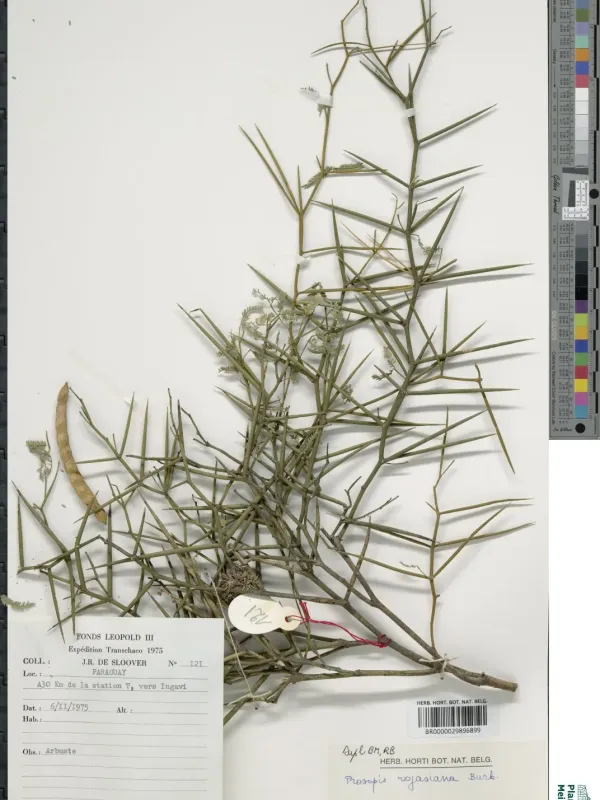
Description
Growing requirements
Prosopis rojasiana is a woody species belonging to the Fabaceae family, native to the arid landscapes of the Gran Chaco region. This plant has evolved specifically to thrive in environments with severe water scarcity and high temperatures, making it a key species for ecological restoration and forage production.
The botanical features of this plant include a deep taproot system, bipinnate leaves, and the ability to produce nutrient-rich pods in challenging soil conditions. These structural adaptations allow the tree to maintain metabolic activity even during prolonged drought, securing its survival where many other crops would fail.
Regarding climate and soil requirements, Prosopis rojasiana demands excellent soil drainage and high solar radiation levels. It excels in sandy or rocky substrates and cannot tolerate waterlogged conditions, which lead to root rot. The species is highly sensitive to frost during its juvenile stage.
Agronomic management involves strategic spacing to ensure sufficient sunlight for each tree, which promotes fruit yield. Weed control is essential during the early establishment phase to prevent competition for limited soil moisture. No significant chemical fertilization is usually required due to the plant's nitrogen-fixing capacity.
The economic utility of the species is multifaceted, ranging from high-quality timber production to its role as a forage source. The pods are highly palatable to livestock, and the nitrogen-fixing properties of the root system contribute to soil fertility improvement in agroforestry systems.
Main diseases and pests
The primary threats to Prosopis rojasiana populations include bruchid beetles that target the seeds within the developing pods. Effective management involves monitoring for signs of infestation and harvesting the pods promptly upon maturity to minimize pest exposure.
Fungal pathogens such as powdery mildew may appear during periods of high humidity. While the plant is inherently resilient, improving airflow and maintaining proper tree spacing significantly reduces the risk of widespread infection within a plantation.