
Prosopis reptans
Prosopis reptans Benth.
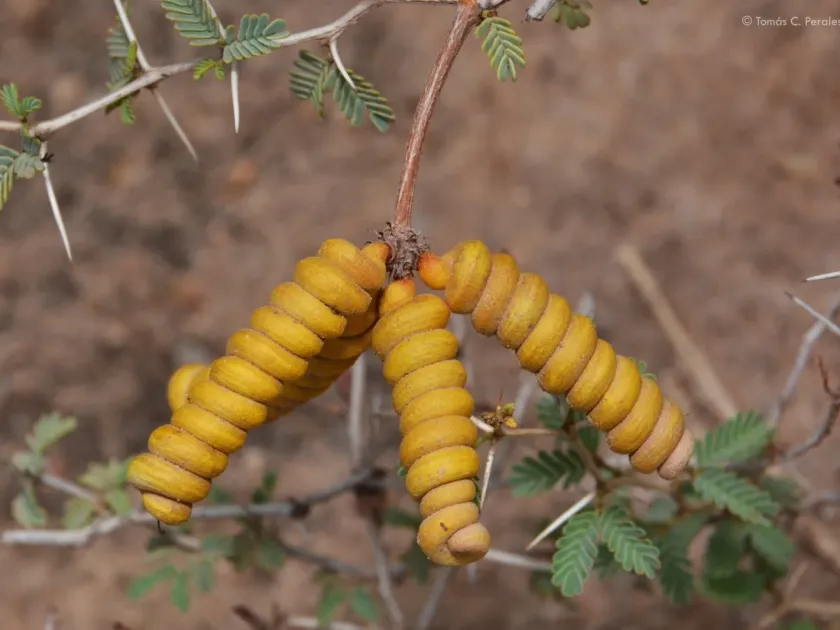
Description
Growing requirements
Prosopis reptans is a perennial plant species belonging to the Fabaceae family. It is widely recognized for its creeping growth habit and extensive rhizomatous root system, which allows it to thrive in challenging environments.
The plant originates from arid and semi-arid regions of South America, particularly Argentina. Its evolutionary history has equipped it with a remarkable ability to survive in saline and alkaline soils where water scarcity is a limiting factor for most crops.
Botanically, it is characterized by pinnate leaves and small, thorny branches that help reduce transpiration. The plant is highly effective at nutrient uptake, allowing it to colonize disturbed areas quickly and establish dominant stands.
Regarding site requirements, it demands high solar radiation and well-drained soil. While it is hardy, its vegetative development is significantly restricted by high shade levels and excessive water logging which can cause root decay.
In an agricultural context, it is often managed as a perennial weed. However, in certain ecological restoration projects, its ability to stabilize soil and survive in harsh desert-like conditions makes it a valuable species for preventing wind erosion.
Main diseases and pests
The plant is susceptible to various fungal pathogens, including rusts and leaf spot diseases, which typically emerge during periods of high humidity or poor field aeration.
Insect pests such as seed beetles (Bruchidae) often target the pods and seeds, which can reduce the natural dispersal rate but may not significantly harm the established perennial rootstock.
Root-knot nematodes are considered a significant threat to its vigor, especially in sandy soils where these pests can proliferate and damage the complex root structure.
Control methods usually involve mechanical destruction of rhizomes combined with targeted herbicide applications to prevent the regrowth of the deep underground network.
Effective management also requires monitoring soil moisture levels, as fluctuating conditions can stress the plant and make it more susceptible to localized infestations.