
Palmer's mesquite
Prosopis palmeri S. Watson
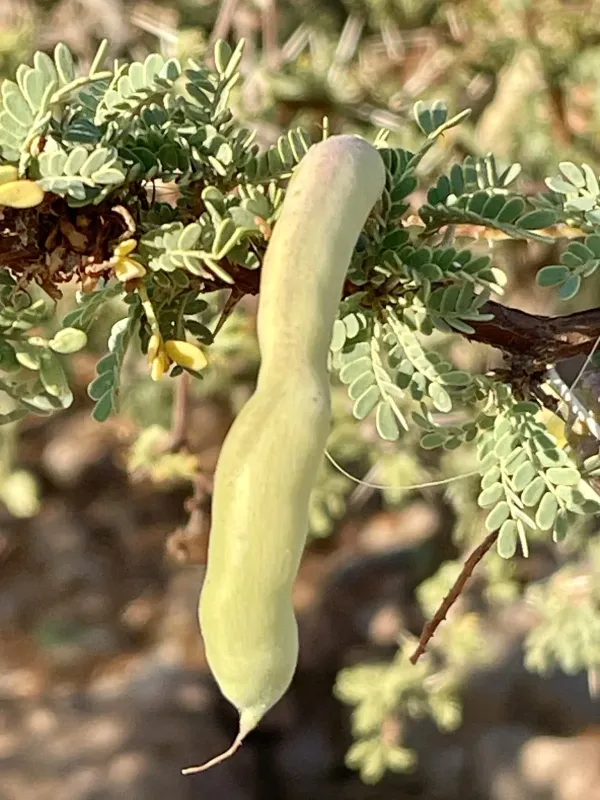
Description
Growing requirements
Prosopis palmeri, commonly known as Palmer's mesquite, is a leguminous tree species native to the Baja California Peninsula. As a member of the Fabaceae family, it has evolved specific physiological traits to endure harsh, hyper-arid environments.
The botanical structure of the plant features long, thorny branches and a deep taproot system designed to extract moisture from deep soil layers. This adaptation makes it an essential species for maintaining biodiversity in desert ecosystems.
Regarding soil requirements, this culture thrives in well-drained, sandy, or gravelly soils. It is particularly noted for its ability to tolerate alkaline and saline conditions that would be detrimental to most traditional agricultural crops.
Environmental conditions for successful growth involve high thermal requirements and intense solar radiation. Prosopis palmeri is extremely drought-resistant and does not require irrigation once the root system is fully established in the appropriate habitat.
In terms of agricultural utility, Palmer's mesquite provides valuable shade, soil stabilization, and high-protein pods that serve as an excellent fodder resource. It is increasingly recognized for its potential in reforestation projects aimed at combating desertification and supporting sustainable livestock farming.