
Prosopis kuntzei
Prosopis kuntzei Harms
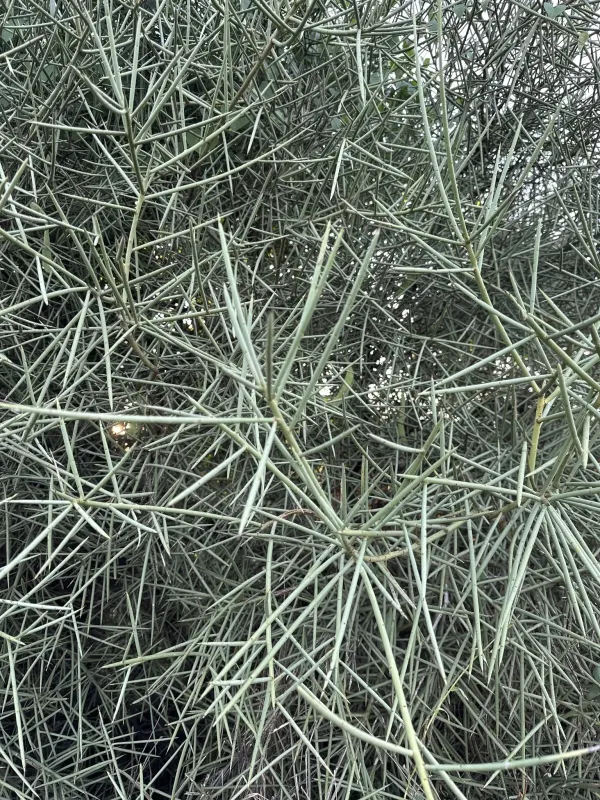
Description
Sowing dates
Propagation of Prosopis kuntzei is typically achieved through seeds, which feature a hard seed coat that necessitates scarification to ensure uniform germination rates.
Seeds should be sown in well-draining, sandy-based substrates at temperatures consistently above 25°C, as the plant is highly sensitive to cold soil temperatures.
When establishing a stand, transplanting young saplings should occur only after the risk of frost has passed to allow the plant to establish its deep taproot.
Planting density depends on the intended use, though wider spacing is recommended to maximize solar exposure, which is vital for the development of the canopy.
During the initial growth stages, supplemental irrigation may be required, but it must be carefully managed to avoid oversaturation of the root zone.
Growing requirements
Prosopis kuntzei belongs to the Fabaceae family and is a specialized xerophyte, native to the arid regions of South America where it thrives in harsh conditions.
The species is well-adapted to poor, sandy, or saline soils, demonstrating remarkable resilience in environments where moisture is a limiting factor for most crops.
Full sun exposure is an absolute requirement for healthy development; any shade provided by nearby structures or trees will result in stunted and deformed growth.
Climate adaptability is limited by its intolerance to severe and prolonged freezing temperatures, making it unsuitable for cultivation in temperate or colder zones.
It prefers areas with deep water tables and low atmospheric humidity, as high humidity and damp soil conditions frequently lead to fungal pathogens in the roots.
Yield
The primary economic value of Prosopis kuntzei is its extremely dense and durable wood, which is highly prized for luxury joinery and long-lasting timber products.
As a leguminous plant, it contributes to soil fertility by nitrogen fixation, making it an excellent candidate for the restoration of degraded arid landscapes.
The tree serves as an important honey source, providing a late-season nectar flow that is highly beneficial for local apiaries operating in dry regions.
While not a major food crop, the pods and seeds contain proteins and minerals that can supplement livestock feed when forage availability is minimal.
Long-term biomass production is efficient in its native range, allowing for sustainable harvest cycles that minimize environmental impact on fragile soils.
Main diseases and pests
Root rot, driven by stagnant water or poor drainage, remains the most significant threat to the health and longevity of Prosopis kuntzei plantations.
Weevils and other wood-boring insects can cause substantial damage to the tree by infesting the seeds or burrowing into the hardwood of the trunk.
Powdery mildew can occasionally affect the foliage if environmental conditions shift toward higher humidity levels or if the planting density hinders airflow.
Effective management requires routine sanitary inspections and the removal of dead or infested branches to prevent the spread of localized infections.
Integrated pest management protocols, including the monitoring of adult insect populations, are recommended for large-scale agricultural or forestry applications.