
Prosopis juliflora
Prosopis juliflora (Sw.) DC.
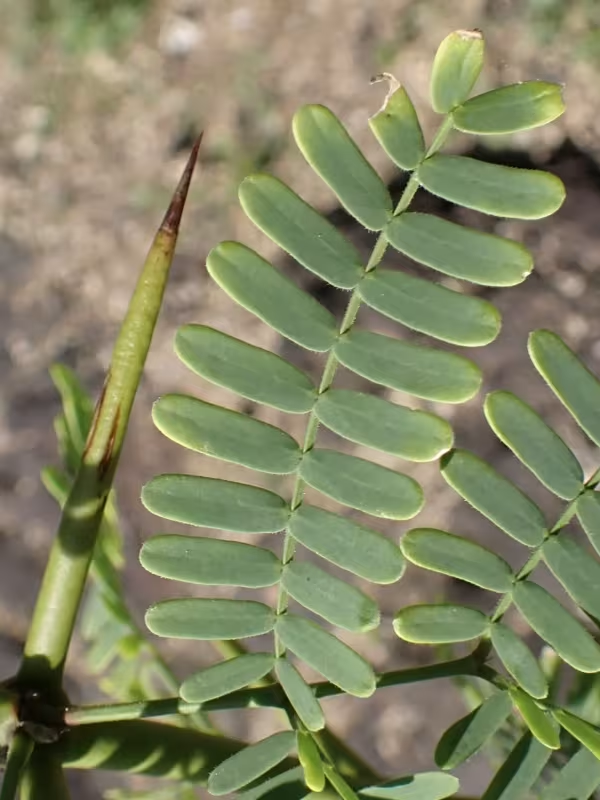
Description
Growing requirements
Prosopis juliflora is a fast-growing, evergreen tree or shrub belonging to the Fabaceae family. It is renowned for its remarkable ability to thrive in extremely arid and semi-arid environments where other vegetation fails to survive.
Originating from the tropical regions of the Americas, this species has been introduced to many arid parts of the world. It serves as a vital component in agroforestry, helping to stabilize soils, provide shade for livestock, and improve soil nitrogen levels through symbiotic bacteria.
The crop is highly adaptable to a variety of soil types, ranging from sandy and rocky terrains to heavy clays and saline substrates. It possesses a deep taproot system that enables it to access water reserves unavailable to shallow-rooted plants.
Agricultural management of Prosopis juliflora involves selecting appropriate sites and managing density. While it requires minimal irrigation in early stages, protection against excessive browsing by livestock is necessary to ensure the healthy development of young saplings.
Its economic importance covers several sectors, including the production of high-grade charcoal, firewood, and nutritious pods that serve as a valuable fodder supplement for goats, sheep, and cattle during dry seasons.
Main diseases and pests
The primary pests affecting Prosopis juliflora are bruchid beetles, which feed on the seeds within the pods. These pests can significantly impact the natural regeneration cycle and the yield of viable seeds for agricultural purposes.
Fungal pathogens causing root rot can become a problem if the trees are planted in poorly drained, waterlogged areas, which is contrary to the species' physiological preference for well-aerated soils.
As an invasive species in many regions, Prosopis juliflora often requires management to prevent it from outcompeting native flora. Mechanical control methods such as uprooting are effective but labor-intensive due to the plant's robust root structure.
Parasitic plants like mistletoe can weaken mature trees, leading to reduced canopy growth and lower biomass productivity, which necessitates regular pruning to maintain plant health.
Management strategies often involve a combination of biological control agents for seed pests and targeted chemical control to maintain the balance between its utility as a fodder crop and its impact on biodiversity.