
Prosopis humilis
Prosopis humilis Gillies ex Hook. & Arn.
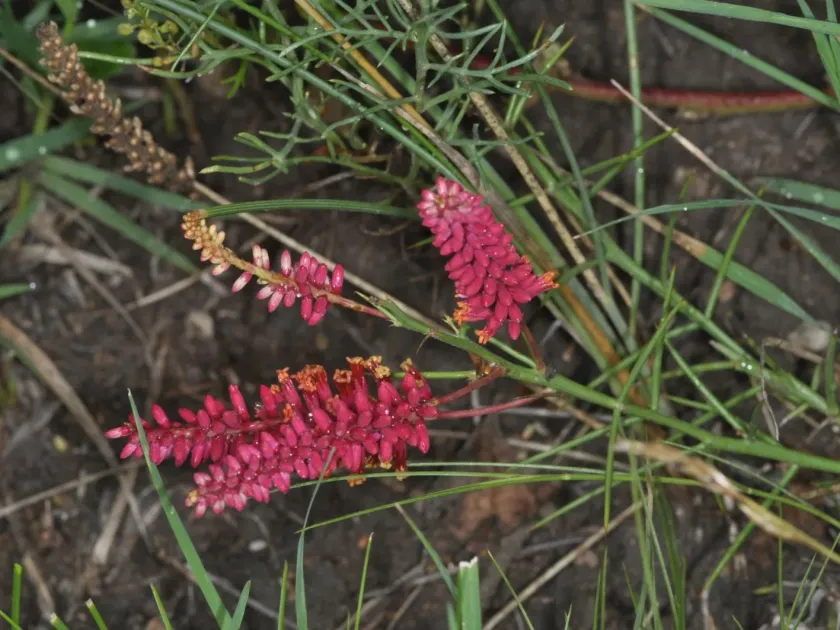
Description
Sowing dates
Prosopis humilis is a low-growing shrub belonging to the Fabaceae family, native to the arid and semi-arid regions of South America.
In agricultural settings, sowing is best performed once soil temperatures have consistently risen, ensuring favorable conditions for seed germination.
The seeds possess a hard, impermeable seed coat, which necessitates mechanical or chemical scarification to improve uniformity and speed of emergence.
Sowing depth should be managed carefully, usually at 2–3 centimeters, allowing the seedling to establish its root system efficiently.
Planting in rows is recommended to facilitate better crop management, weed control, and access to light, which is crucial for the healthy development of this species.
Growing requirements
This species is highly adapted to sandy or gravelly soils that provide excellent drainage, as it is intolerant of waterlogged conditions.
Prosopis humilis thrives in full sun exposure and is highly resistant to drought and high temperatures, making it suitable for marginal land cultivation.
Soil pH should preferably be neutral to slightly alkaline, which matches the natural habitat of this legume within its native range.
While the plant is hardy once established, it requires protection from excessive weed competition during the early stages of its establishment.
No intensive irrigation is needed once the root system has developed, as the plant can extract moisture from significant soil depths effectively.
Yield
The primary agricultural interest in this species lies in its capacity to provide forage in environments where traditional crops fail to survive.
Yield production, primarily in the form of vegetative biomass and protein-rich pods, is influenced by seasonal precipitation and site fertility.
In pastoral systems, the pods serve as a valuable nutrient supplement for livestock, contributing to overall health and weight gain during drier months.
Yield optimization can be achieved through judicious nutrient management, specifically the addition of phosphorus to support leguminous growth.
Prosopis humilis is valued not for peak mass production but for its reliability and resilience under challenging environmental stressors.
Main diseases and pests
Seed-feeding insects, such as specific species of weevils, represent a primary biological threat that can significantly reduce crop quality.
Fungal diseases can occur if plants are subjected to poorly drained soil or consistently high humidity, potentially leading to root decay.
Weed encroachment is a major challenge during the early stages of growth, requiring timely cultivation or manual removal to avoid competition for nutrients.
Leaf-eating pests may periodically reduce plant vigor, though the shrub generally possesses strong natural resistance to many common agricultural diseases.
Effective pest management involves regular monitoring and maintaining good soil drainage to prevent environmental stress that weakens the plants.
Harvesting
Harvesting of seeds occurs when the pods reach full physiological maturity, indicated by a dry texture and characteristic darkening of the seed pods.
Timely harvest is critical to prevent the natural dehiscence of pods, which can lead to significant yield losses in the field.
For forage purposes, biomass should be harvested or grazed at the flowering stage to maximize the nutritional density, especially protein levels.
Once harvested, seeds must be cleaned of debris and stored in dry conditions to maintain viability for future planting seasons.
Proper post-harvest handling ensures that the seeds retain their germination potential and quality for subsequent agricultural cycles.