
Prosopis fiebrigii
Prosopis fiebrigii Harms
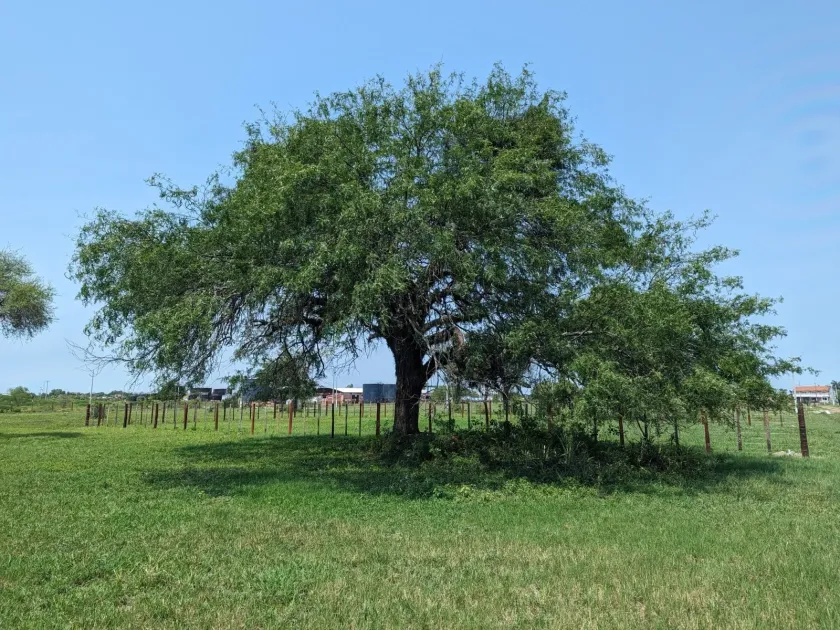
Description
Growing requirements
Prosopis fiebrigii Harms is a perennial woody species belonging to the Fabaceae family. As a member of the Prosopis genus, it is well-regarded for its extreme resilience in arid and semi-arid environments across its native range in South America, specifically in regions like Paraguay.
The plant exhibits high adaptability to various soil types, preferring deep, well-drained soils, but it is also capable of flourishing in degraded and saline soils where nutrient availability is limited. Its primary ecological function involves soil improvement through nitrogen fixation.
Climatically, this species is suited for regions with pronounced dry seasons and high heat indexes. The plant's physiology is optimized for water conservation, utilizing a deep taproot system to access subterranean moisture when surface water is unavailable.
Morphologically, the species is characterized by a shrubby or tree-like growth habit, typically armed with spines. The foliage consists of pinnate leaves that are highly nutritious, providing essential dietary proteins for livestock, especially during periods when traditional forage is scarce.
Agricultural interest in Prosopis fiebrigii centers on its potential for agroforestry systems in drylands. By integrating this species into grazing lands, producers can enhance land productivity while protecting against wind and water erosion through its dense, spreading root architecture.