
Prosopis denudans
Prosopis denudans Benth.
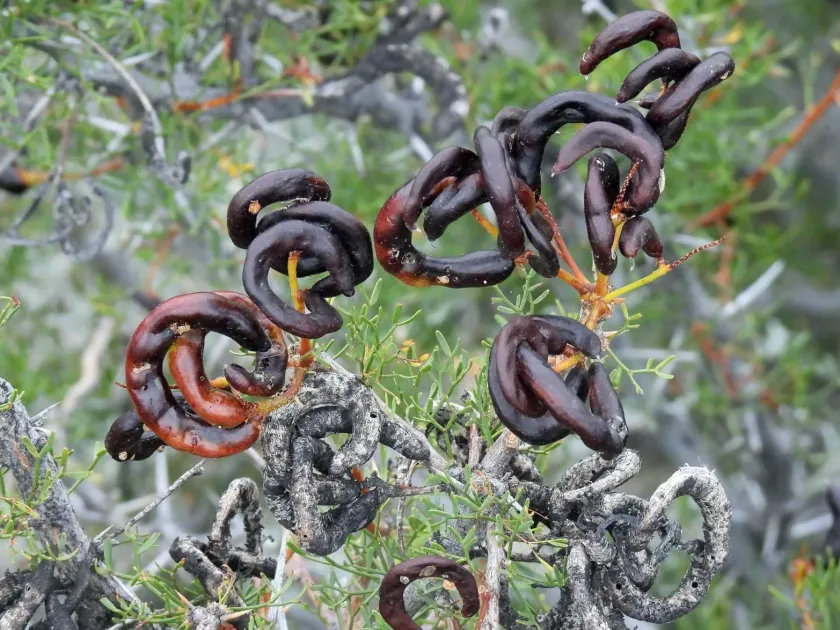
Description
Growing requirements
Prosopis denudans is a distinct shrub belonging to the Fabaceae family, native to the arid environments of Argentina. This plant is well-adapted to extreme environmental stressors, making it a subject of interest for sustainable land management in semi-arid regions.
Botanically, it is classified as a xerophyte, featuring specialized morphological adaptations such as reduced leaf surfaces and a deep, penetrating root system that maximizes water uptake in dry climates. These traits ensure survival during prolonged droughts.
Regarding soil requirements, Prosopis denudans thrives in sandy and well-drained soil profiles. It shows significant intolerance to poorly aerated or waterlogged conditions, which can lead to rapid decay of the root system.
Climate requirements for this culture are centered on high thermal input and intense sunlight. It is sensitive to frost and thrives in temperatures exceeding 30 degrees Celsius, which characterizes its native distribution range.
The agricultural importance of Prosopis denudans lies in its ability to fix atmospheric nitrogen and prevent soil erosion. It serves as an essential component in agroforestry systems aiming to restore productivity to degraded soils through natural soil enrichment.
Main diseases and pests
The primary threats to the cultivation of Prosopis denudans include seed-predating insects, specifically bruchid beetles, which can infest stored seeds and significantly limit the success rate of new plantings.
Pathogenic fungi related to root rot are common in instances where soil moisture levels are not strictly managed. Avoiding water accumulation near the base of the plant is critical for long-term health.
Weed competition during the initial establishment phase is a major factor limiting growth. Without proper manual or mechanical intervention, seedlings often struggle to access necessary nutrients and light.
Herbivory, both by wild animals and uncontrolled livestock grazing, represents a significant barrier to the maturation of younger Prosopis specimens in exposed rural landscapes.
Proactive management of these threats involves monitoring foliage for signs of chlorosis or physical damage, ensuring that density is optimized to prevent microclimate conditions that favor the spread of fungal pathogens.