
Prosopis campestris
Prosopis campestris Griseb.
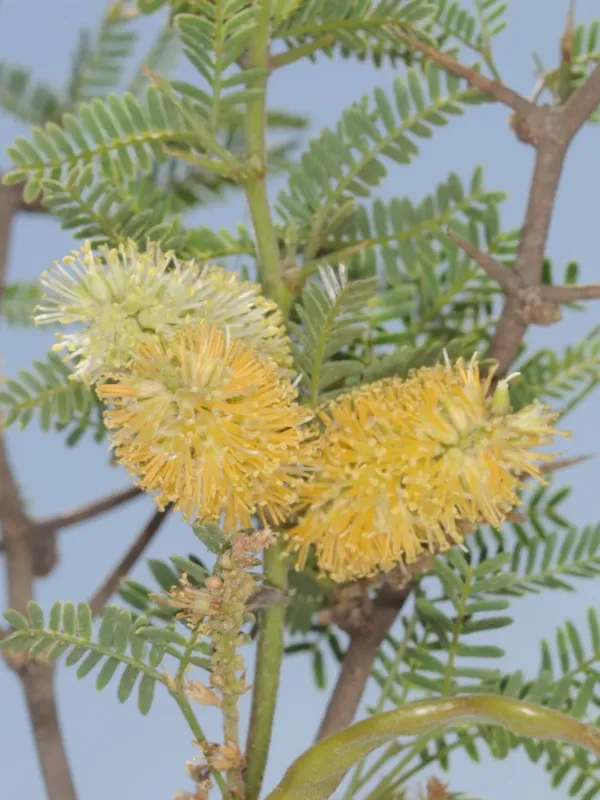
Description
Growing requirements
Prosopis campestris is a perennial shrub belonging to the Fabaceae family. It is native to the semi-arid regions of South America, primarily found in the steppe landscapes of Argentina.
The plant thrives in sunny environments with excellent drainage and is highly adaptable to poor, sandy, or rocky soils. It exhibits remarkable resilience to prolonged drought conditions.
Optimal growth is achieved during long periods of high temperatures. Prosopis is sensitive to severe frost, which significantly stunts its development during the colder months of the year.
The root system of this species is deep and robust, allowing it to extract moisture from deep soil layers, which ensures its survival when water availability is extremely limited.
Agricultural management is generally low-impact, as the species is well-adapted to natural conditions, including mildly saline or alkaline soils common in its native range.
Yield
Prosopis campestris is primarily used for biomass production, serving as a reliable source of coarse forage for livestock, especially during periods of extreme feed scarcity.
The fruits and foliage are nutritious, providing essential proteins and carbohydrates for ruminants in areas where conventional forage crops may struggle to survive.
The timber produced by this plant is highly valued for its hardness and durability, making it suitable for constructing farm infrastructure, such as fence posts and shed materials.
The blossoms are considered an excellent nectar source for bees, supporting local honey production and promoting biodiversity within agricultural landscapes.
The plant also contributes to soil health through nitrogen fixation, which enhances nutrient levels and supports the growth of associated flora in pastures.
Main diseases and pests
The primary threats include seed beetles (bruchids) that infest the pods, causing significant losses and reducing the overall quality of the harvested feed.
Fungal pathogens may occasionally affect the foliage if humidity levels remain high for extended periods, though the species is generally resistant under typical dry conditions.
Overgrazing poses a serious risk to young plants, as constant browsing can physically damage the structure of the shrubs and limit their potential for future biomass production.
Competition from invasive weeds during the early establishment phase can hinder growth, requiring consistent field management and site preparation before planting.
Climatic instability, particularly late frosts, can damage fresh vegetative shoots, necessitating careful planning regarding the timing and location of plantation efforts.