
Fiji Fan Palm
Pritchardia pacifica
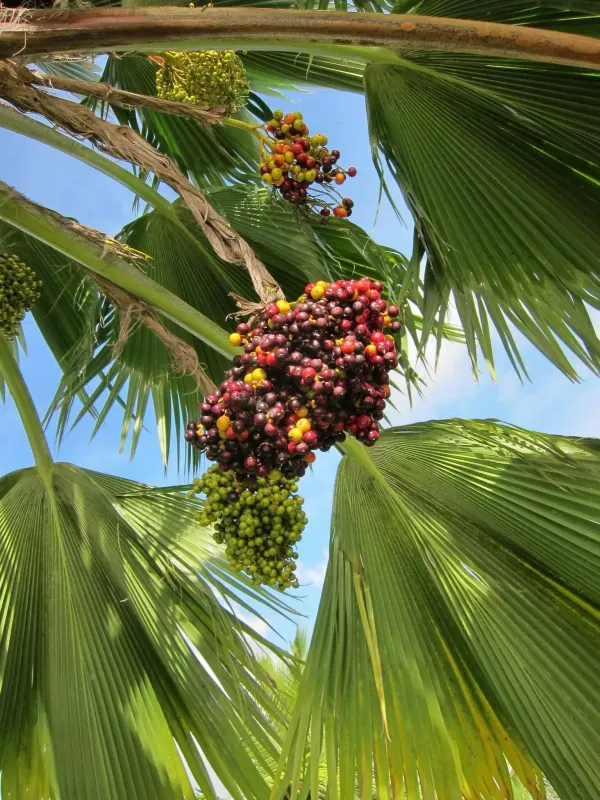
Description
Growing requirements
The Fiji Fan Palm (Pritchardia pacifica) is a member of the Arecaceae family, highly prized for its large, fan-shaped, pleated leaves. Native to the islands of Fiji and Tonga, this palm flourishes in tropical environments with high humidity and consistent warmth.
This species requires stable temperatures, ideally between 20°C and 28°C. It is extremely sensitive to cold drafts and frost, making it suitable mainly for indoor cultivation, conservatories, or climate-controlled greenhouses in non-tropical regions.
Soil requirements focus on excellent drainage and organic richness. A mixture comprising peat moss, perlite, and high-quality potting soil works best to ensure the roots remain oxygenated. Compaction of the soil must be avoided at all costs.
Regarding light, it thrives in bright, filtered light. Young plants are prone to leaf scorch under direct sun, but mature specimens become more resilient. Proper light exposure is essential for maintaining the deep green color of the foliage.
Watering should be consistent; the plant prefers the soil to be damp but never waterlogged. During winter, the watering schedule should be reduced to prevent the roots from rotting, as the plant's metabolic activity slows down significantly.
Main diseases and pests
Spider mites are the most common pests, especially in environments where the air is too dry. Maintaining high humidity through misting or a humidifier is a critical preventive measure for the health of the palm.
Root rot caused by overwatering or poorly drained pots is the most lethal condition for Pritchardia pacifica. It is vital to use containers with adequate drainage holes and use a well-aerated potting mix.
Mealybugs can often be found in the folds of the fronds. Regular inspection of the leaf axils is recommended, and if detected, horticultural oils or systemic insecticides should be applied.
Nutrient deficiencies, specifically chlorosis, occur if the soil pH is incorrect or if micronutrients are absent. Applying a balanced, slow-release fertilizer designed for palms ensures optimal development.
Fungal infections can occur if there is poor air circulation around the palm. Providing good ventilation helps keep the foliage dry and free from pathogens that thrive in stagnant, humid conditions.