
Pritchardia martii
Pritchardia martii
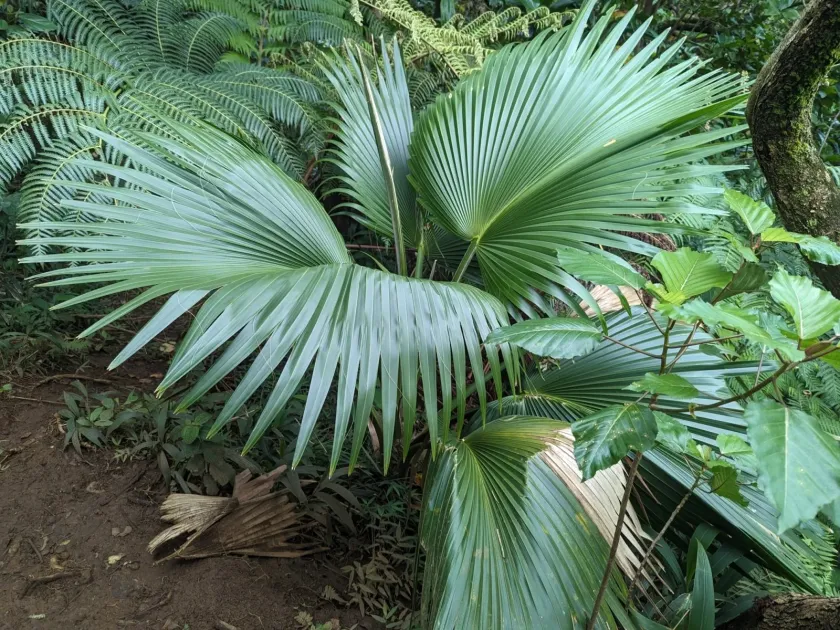
Description
Growing requirements
Pritchardia martii, commonly known as a type of fan palm, belongs to the family Arecaceae. Native to the Hawaiian Islands, this species is typically found in moist, tropical forest environments. It is highly valued for its large, distinctive fan-shaped leaves, which are pleated and provide a striking structural element in both greenhouse and indoor settings.
The climate requirements for this palm are quite specific; it thrives in tropical conditions characterized by warmth and consistently high humidity. When grown indoors or in temperate climates, it requires protection from drafts and cold, as it is highly sensitive to temperatures dropping below typical tropical ranges. Proper placement in bright, filtered light is essential for healthy growth.
Soil quality is paramount for the health of Pritchardia martii. It requires a well-draining, nutrient-rich substrate, typically composed of peat moss, pine bark, and coarse sand. Adequate drainage is crucial, as the roots are highly susceptible to decay if kept in waterlogged soil. Regularly flushing the soil during watering helps prevent the buildup of salts, which can scorch the leaf tips.
Agrotechnical maintenance includes consistent watering practices; the soil should be kept evenly moist but never saturated. Humidity management is equally important, as dry indoor air often leads to brown, crispy leaf edges. Fertilization with a specialized palm fertilizer high in micronutrients should be performed sparingly during the active growing season to support robust frond development.
Economically and aesthetically, this plant is primarily utilized in ornamental horticulture. It is a preferred choice for high-end interior landscaping, botanical conservatories, and public display spaces. Because of its slow-growing nature, Pritchardia martii is often regarded as a long-term investment, remaining a centerpiece plant in interior designs for many years.
Main diseases and pests
Pritchardia martii faces several challenges if its environmental needs are not met. The most common threats involve improper water management and pests that thrive in dry indoor environments. Vigilant monitoring is required to detect early signs of infestation or fungal issues before they severely damage the structural integrity of the palm fronds.
- Spider mites — cause stippling and discolouration of the foliage.
- Scale insects — appear as hard, bump-like structures on stems and leaf undersides.
- Mealybugs — white, cottony masses that thrive in protected areas of the leaves.
- Root rot — a direct result of overwatering and insufficient soil drainage.
- Leaf spot fungi — often caused by poor ventilation and water settling on the leaves.