
Arkansas rose
Rosa arkansana Porter
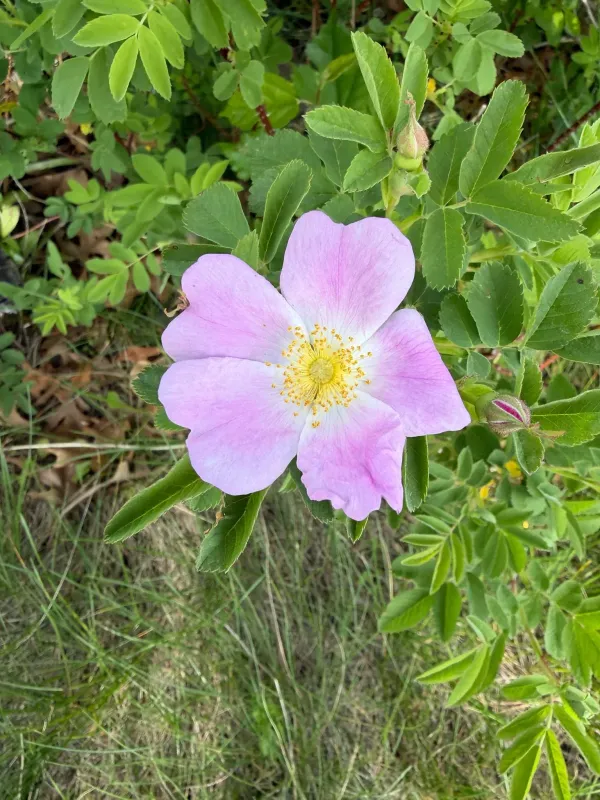
Description
Growing requirements
The Arkansas rose (Rosa arkansana) is a member of the Rosaceae family, native to the Great Plains and prairies of North America.
This species is highly adapted to sunny environments and thrives in open, exposed locations where it receives ample natural light throughout the day.
It prefers well-drained soil types, demonstrating remarkable resilience in poor or sandy soils where other ornamental rose varieties struggle to establish.
The plant is known for its high drought tolerance and exceptional winter hardiness, allowing it to survive extreme temperature fluctuations across its range.
A distinctive botanical feature is its vigorous underground rhizome system, which enables the rose to spread efficiently and create dense thickets in natural habitats.
Main diseases and pests
Powdery mildew is a common fungal threat to the Arkansas rose, particularly during periods of high humidity and poor air movement around the foliage.
Black spot fungus is another major issue that causes leaf drop, typically occurring in regions with frequent summer rainfall and warm temperatures.
Aphids are the primary insect pests that infest tender new growth, which can lead to stunted shoot development and distorted flower buds.
Spider mites frequently attack the leaves during hot and dry weather conditions, causing them to develop a stippled appearance and eventually dry out.
Integrated pest management strategies are crucial, including careful pruning to enhance airflow and the application of targeted treatments when necessary.